Category Archives: Manuals

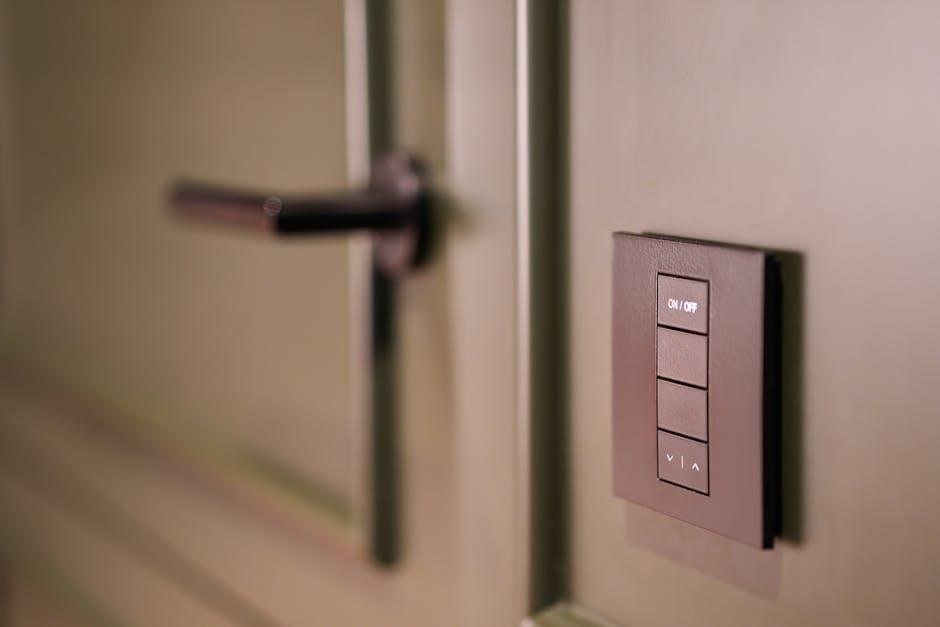
lutron motion sensor dimmer switch manual

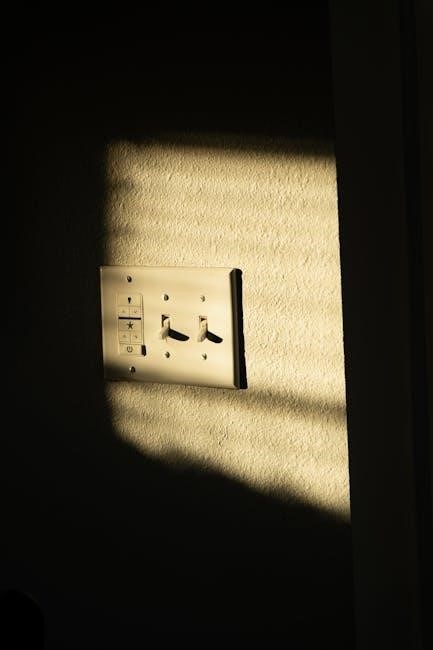
Lutron Motion Sensor Dimmer Switch Manual: A Comprehensive Guide

This manual provides detailed instructions for installing and configuring Lutron Maestro motion sensor dimmer switches‚ covering wiring‚ settings‚ and troubleshooting procedures.

It includes information on various models‚ occupancy/vacancy modes‚ and compatibility with Lutron HomeWorks systems‚ ensuring optimal performance and user experience.

Understanding Lutron Maestro Motion Sensor Dimmer Switches

Lutron Maestro motion sensor dimmer switches represent a significant advancement in home lighting control‚ seamlessly blending convenience with energy efficiency. These innovative devices automatically adjust lighting based on room occupancy‚ eliminating the need for manual operation and reducing energy waste.

They utilize passive infrared (PIR) technology to detect motion‚ offering customizable settings for sensitivity and time delay to suit individual preferences and room characteristics. The switches are designed for both single-pole and 3-way installations‚ providing flexibility for various wiring configurations.

Understanding the specific model number – such as MSCL-OP153M or MSCL-VP153M – is crucial for compatibility and accessing relevant application notes. Proper installation‚ as detailed in this guide‚ ensures optimal performance and longevity of the system.

Key Features and Benefits

Lutron Maestro motion sensor dimmer switches boast several key features‚ including automatic on/off functionality‚ adjustable time delay‚ and customizable sensitivity settings. These features translate into significant benefits for homeowners‚ such as enhanced convenience and reduced energy consumption.

The occupancy/vacancy modes allow users to tailor the switch’s behavior to their specific needs‚ ensuring lights turn on automatically upon entering a room or only when motion is detected in a vacant space.

Compatibility with Lutron HomeWorks systems expands control possibilities‚ while the built-in dimmer functionality provides ambiance and further energy savings. Easy installation and a clean‚ modern aesthetic add to the overall value.

Model Numbers and Compatibility

Lutron offers a range of Maestro motion sensor dimmer switches‚ with key models including the MSCL-OP153M and MSCL-VP153M. Identifying Ariadni/Toggler dimmers requires checking the front of the device‚ as the product number isn’t on a traditional label.

These switches are designed for compatibility with a variety of incandescent‚ halogen‚ and LED bulbs. However‚ optimal performance is achieved when used within the Lutron ecosystem‚ particularly with Lutron HomeWorks Maestro Remote Dimmers (HD-RD).

Ensure compatibility with your existing wiring configuration before installation‚ and consult Lutron’s documentation for specific bulb load requirements.

Maestro MSCL-OP153M/MSCL-VP153M

The Maestro MSCL-OP153M and MSCL-VP153M models are popular choices for automated lighting control. Installation begins by carefully removing the existing wallplate adapter and dimmer/switch‚ ensuring you can access the wiring and product label.

These dimmers feature both occupancy and vacancy sensing modes‚ allowing customization based on room usage. They are designed for single-pole and 3-way wiring configurations‚ offering flexibility during installation.

Proper wiring is crucial; always disconnect power before beginning and consult the detailed wiring diagrams provided in the installation guide for safe and effective setup.

Ariadni/Toggler Dimmer Identification

Identifying Ariadni or Toggler dimmers differs from standard Maestro models. Unlike most Lutron products with a label‚ the model number isn’t found on a separate sticker. Instead‚ the product number is directly printed on the dimmer itself.

Look for the model number located on the front of the dimmer‚ either on the top left or directly below the control buttons. This direct printing method streamlines identification‚ eliminating the need to search for a potentially missing label.

Knowing this distinction is vital during installation and troubleshooting‚ ensuring you have the correct information for your specific dimmer model.

Installation Process: A Step-by-Step Guide

Begin the installation by carefully disconnecting power at the circuit breaker to ensure safety. Next‚ remove the existing wallplate adapter and unscrew the current switch. Gently pull the switch out of the wall box‚ providing enough space to clearly view the wiring connections and the product label.

This initial step is crucial for a safe and efficient installation. Always double-check that the power is off before proceeding. Proper preparation minimizes risks and allows for a smooth transition to the new Lutron motion sensor dimmer switch.

Removing the Existing Switch and Wallplate

Prior to any wiring‚ safely disconnect power at the circuit breaker. Begin by unscrewing and removing the existing wallplate adapter‚ carefully setting it aside. Next‚ unscrew the current switch from the wall box. Gently pull the switch outwards‚ being cautious not to strain the wires.

Pull it out far enough to clearly see the wiring connections and the product label‚ if present. Note the existing wiring configuration for reference during the Lutron dimmer installation. This careful removal process ensures a safe and organized transition.

Wiring Configurations

Successful installation hinges on correct wiring. Lutron Maestro motion sensor dimmers support both single-pole and 3-way configurations. Single-pole installations involve replacing a standard switch with the dimmer‚ utilizing line‚ load‚ and neutral wires.

3-way setups‚ however‚ require connecting the dimmer alongside a standard mechanical switch. Proper identification of line‚ load‚ and traveler wires is crucial. Always consult the detailed wiring diagrams provided with your specific model to ensure accurate connections and avoid potential electrical hazards.

Single-Pole Installation

Begin by carefully removing the existing switch and wallplate. Before disconnecting wires‚ note their positions for reference. Unscrew and gently pull the dimmer/switch out to view the label. Connect the line (hot) wire to the line terminal‚ the load wire to the load terminal‚ and the neutral wire to the neutral terminal.

Ensure all connections are secure. Carefully tuck the wires back into the electrical box‚ mount the dimmer‚ and attach the wallplate adapter. Power on the circuit and verify proper operation. Refer to the manual’s diagrams for visual guidance.

3-Way Installation with Standard Mechanical Switch

For 3-way installations‚ identify the common terminal on your existing mechanical switch. Connect the line wire to the common terminal and the traveler wires to the remaining terminals. At the Lutron dimmer location‚ connect the line/load wire to the designated terminal‚ and the traveler wires to the traveler terminals.

Ensure secure connections and carefully tuck wires into the box. Power on the circuit and test functionality from both switch locations. Proper wiring is crucial for correct 3-way operation; consult the wiring diagram in the manual for clarity.

Setting Up the Motion Sensor

The Lutron motion sensor offers both occupancy and vacancy modes. Occupancy mode automatically turns lights on upon motion detection and off after a set time delay. Vacancy mode requires manual activation; lights turn on with the switch‚ then off automatically when no motion is detected.

Adjust sensitivity to control the range of motion detection‚ minimizing false triggers. Fine-tune the time delay to customize how long lights remain on after motion ceases. Experiment with settings to achieve optimal performance for your specific space and needs.

Occupancy vs. Vacancy Mode

Occupancy mode is ideal for areas needing automatic lighting‚ turning lights on immediately upon motion detection. This is convenient for hallways or bathrooms. Vacancy mode requires manual activation – you first switch the lights on‚ and then the sensor maintains illumination while motion persists.

Vacancy mode is best suited for spaces where you don’t always want lights on automatically‚ like bedrooms or offices. Selecting the appropriate mode depends on your preference and the room’s intended use‚ optimizing energy savings and convenience.

Adjusting Sensitivity and Time Delay

Sensitivity controls the range of motion the sensor detects; higher sensitivity means it picks up movement from further away‚ while lower sensitivity reduces false triggers. Time delay determines how long the lights remain on after motion ceases. Adjusting these settings personalizes the sensor’s behavior.

Fine-tuning sensitivity prevents unwanted activations from pets or distant movements. Setting the appropriate time delay ensures lights stay on long enough for comfortable use‚ but don’t waste energy when the space is unoccupied. Experiment to find the optimal balance for your needs.

Customizing Settings with Application Notes

Lutron provides detailed application notes to further customize your Maestro motion sensor dimmer switch. Application Note 461 details the Test Mode‚ offering a temporary‚ short timeout – less than 15 seconds – ideal for coverage testing. This mode automatically exits after 5 minutes or a button press.

Utilizing these notes allows for precise adjustments beyond standard settings. The temporary timeout feature streamlines coverage verification‚ ensuring the sensor accurately detects motion within the desired area. These resources empower users to optimize performance and tailor the system to specific environmental requirements and preferences.

Test Mode Functionality

The Maestro motion sensor dimmer’s Test Mode provides a quick method for verifying sensor coverage. Activated through application notes (Application Note 461)‚ it initiates a temporary‚ shortened timeout – consistently less than 15 seconds. This allows for immediate feedback on motion detection capabilities within the space.

Crucially‚ this mode isn’t permanent. The device automatically exits Test Mode after 5 minutes of inactivity or upon any button press. If no motion is detected for over 15 seconds during testing‚ the connected lights will switch off‚ confirming functionality.

Temporary Timeout for Coverage Testing

Utilizing the Test Mode feature offers a streamlined approach to assess the motion sensor’s range and responsiveness. This function establishes a deliberately brief timeout period‚ generally under 15 seconds‚ facilitating rapid evaluation of detection zones. It’s a valuable tool during initial setup and for diagnosing potential coverage issues.

This temporary adjustment doesn’t alter the permanently programmed settings. The sensor automatically reverts to its standard timeout duration after either 5 minutes of inactivity or any user interaction with the device’s controls‚ ensuring normal operation resumes promptly.

Troubleshooting Common Issues

Encountering problems with your Lutron motion sensor dimmer? Two frequent concerns are lack of power and the sensor’s inability to detect movement. If the dimmer receives no power‚ double-check the circuit breaker and wiring connections‚ ensuring they are secure and correct.

For motion detection failures‚ verify the sensor’s line of sight isn’t obstructed and adjust sensitivity settings. Consider environmental factors; excessive heat or direct sunlight can sometimes interfere with performance. If issues persist‚ consult the full installation guide or contact Lutron support.

No Power to the Dimmer

If your Lutron dimmer isn’t receiving power‚ begin by verifying the circuit breaker hasn’t tripped. Reset it if necessary. Next‚ carefully inspect all wiring connections within the electrical box. Ensure wires are securely fastened under the screw terminals and that no loose connections exist.

Confirm the neutral wire is properly connected‚ as this is crucial for operation. Use a voltage tester to confirm power is reaching the dimmer itself. If power is present at the wiring but the dimmer remains unresponsive‚ the unit may be defective and require replacement.

Sensor Not Detecting Motion

If the motion sensor isn’t activating‚ first ensure there are no obstructions blocking its field of view. Objects like furniture or curtains can interfere with detection. Next‚ check the sensitivity setting; a lower setting reduces the range. Utilize the “Test Mode” function (accessed via the dimmer or application notes) to assess coverage and identify potential dead zones.

Confirm the sensor is mounted securely and isn’t vibrating. Consider ambient temperature – extreme temperatures can sometimes affect performance. If issues persist‚ a reset of the dimmer might be necessary to restore factory settings and recalibrate the sensor.

Cleaning and Maintenance

To maintain the optimal performance and appearance of your Lutron Maestro motion sensor dimmer switch‚ regular cleaning is recommended. Use a clean‚ damp cloth to gently wipe the surface of the dimmer. Avoid abrasive cleaners or solvents‚ as these can damage the finish.

Ensure the cloth is only slightly damp to prevent moisture from entering the device. Do not immerse the dimmer in water or any other liquid. Periodic visual inspections can help identify any dust buildup or debris that may affect functionality.

Recommended Cleaning Practices

For routine maintenance‚ a lightly dampened‚ soft cloth is the ideal cleaning tool for your Lutron Maestro dimmer. Avoid harsh chemicals‚ abrasive pads‚ or spray cleaners‚ as these can potentially harm the device’s surface and internal components.

Always ensure the dimmer switch is dry before restoring power. Disconnect power at the breaker before cleaning‚ if possible‚ for added safety. Regular‚ gentle cleaning prevents dust accumulation‚ maintaining responsiveness and extending the lifespan of your motion sensor dimmer.

Remote Control Compatibility

Lutron Maestro motion sensor dimmer switches demonstrate compatibility with Lutron HomeWorks Maestro Remote Dimmers‚ specifically the HD-RD series. These remote dimmers offer expanded control capabilities‚ allowing users to adjust lighting levels and manage scenes from a convenient distance.

It’s crucial to verify compatibility before integrating any remote control system. Utilizing only approved Lutron accessories ensures seamless operation and avoids potential interference or malfunctions. Refer to Lutron’s documentation for a complete list of compatible remote control options and detailed pairing instructions.

Lutron HomeWorks Maestro Remote Dimmers (HD-RD)

The Lutron HomeWorks Maestro Remote Dimmers (HD-RD) provide a sophisticated method for controlling your Maestro motion sensor dimmer switches within a broader‚ integrated lighting system. These remotes offer features beyond basic on/off and dimming‚ including scene control and scheduling capabilities.

Proper installation and configuration within the HomeWorks system are essential for optimal performance. Refer to the Lutron HomeWorks documentation for detailed instructions on adding and configuring HD-RD remotes. Ensure the system is correctly programmed to recognize and respond to the remote’s commands‚ maximizing convenience and control.

Safety Precautions and Warnings

Important: Electrical shock hazard! Always disconnect power at the circuit breaker before installing or servicing the dimmer switch. Failure to do so could result in serious injury or death. This device is intended for indoor use only and should not be exposed to moisture or extreme temperatures.
Do not attempt to disassemble or repair the dimmer switch yourself. If you encounter any issues‚ contact a qualified electrician. Cleaning should be performed with a clean‚ damp cloth – avoid harsh chemicals or abrasive cleaners. Improper installation or use may void the warranty and create a safety hazard.

unimac washer manual

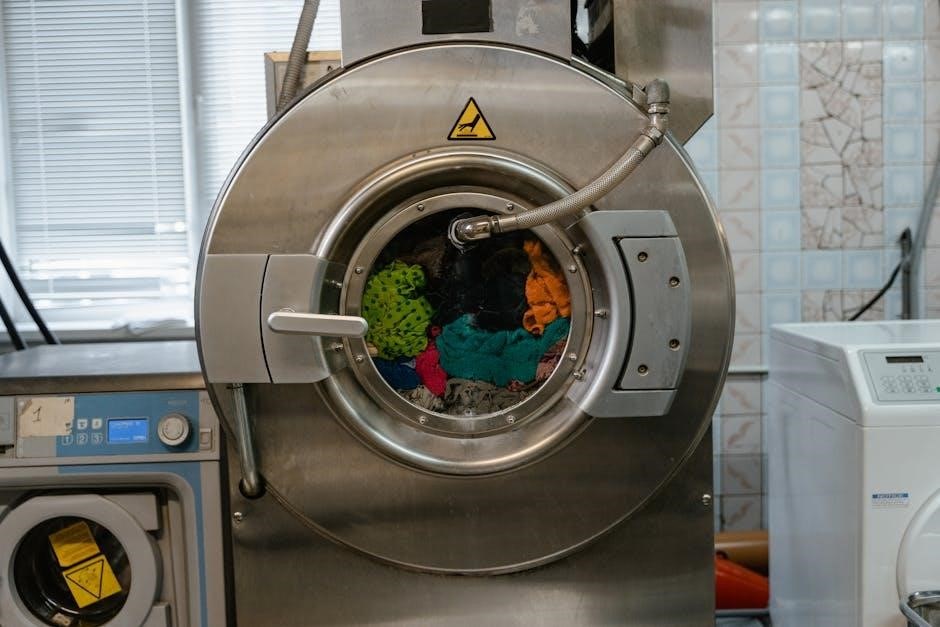
Unimac Washer Manual: A Comprehensive Guide

This manual provides detailed instructions, from installation and operation to troubleshooting, ensuring optimal performance of your Unimac washing machine.

Unimac washers are renowned for their durability and commercial-grade performance, now accessible for residential use. This guide serves as a comprehensive resource for understanding and maintaining your Unimac washing machine. Originally designed for high-volume laundry facilities, Unimac prioritizes robust construction and reliable operation.

Whether you’re a first-time user or familiar with laundry appliances, this manual will detail essential features, safety precautions, and troubleshooting steps. It covers everything from initial setup to advanced operational techniques, ensuring years of efficient service. Explore the power and longevity of Unimac!

Understanding Your Washer Model

Identifying your specific Unimac washer model is crucial for accessing tailored support and replacement parts; Locate the model and serial number plate, typically found inside the washer door or on the rear panel. This information is essential when contacting Unimac support or ordering components.

Different models offer varying cycle options, capacities, and features. Refer to the model-specific diagrams within this manual to familiarize yourself with the control panel and internal components. Understanding these nuances will optimize your washing experience and ensure proper maintenance.

Installation and Setup

Proper installation is vital for safe and efficient operation. This section details unpacking, connections, leveling, and ensuring correct electrical grounding.

Unpacking and Inspection

Carefully unpack your new Unimac washer, checking for any visible damage incurred during shipping. Inspect the exterior for dents, scratches, or broken parts.

Verify all components are present, referencing the parts list within this manual. Retain all packaging materials until you’ve confirmed the washer functions correctly.

Report any damage or missing parts immediately to the retailer or Unimac support. Do not attempt to operate a damaged machine. Proper inspection prevents future issues.

Connecting Water Supply

Before connecting, ensure the water supply valves are fully closed. Attach the inlet hoses to both the washer and the hot and cold water faucets, using new rubber washers.

Hand-tighten the connections, then use pliers to gently tighten another half-turn. Avoid over-tightening, which can damage the fittings.

Slowly open the water supply valves and check for leaks at both hose connections. Address any leaks immediately before proceeding. Proper connection prevents water damage.

Electrical Requirements and Grounding

This Unimac washer requires a dedicated, properly grounded 120-volt, 60Hz electrical supply. Do not use extension cords or adapters.

The washer must be grounded to minimize the risk of electric shock. The power cord includes a grounding wire with an appropriate plug.

Never remove or alter the grounding prong. If a grounding outlet isn’t available, consult a qualified electrician for proper installation. Incorrect grounding voids the warranty and poses a safety hazard.

Leveling the Washer

Proper leveling is crucial to minimize vibration and noise during operation. Use a bubble level on the top of the washer to check for evenness.

Adjust the leveling legs, located at the bottom corners of the washer, by rotating them clockwise or counterclockwise.

Tighten the lock nuts against the washer’s base after adjusting each leg to secure the leveling. Re-check the level after adjustments, ensuring stability on the floor.

Operating Instructions

Follow these steps for efficient washing: load clothes, add detergent, select a cycle, and start the machine for optimal cleaning results.

Loading the Washer

Proper loading ensures effective cleaning and prevents damage to both your clothes and the Unimac washer. Distribute items loosely within the drum, avoiding overcrowding.

Overloading restricts movement, hindering the wash process. Separate garments by fabric type and color before loading. Check pockets for objects like coins or keys.

For optimal results, leave sufficient space at the top of the drum – approximately one-third empty – to allow for proper agitation and rinsing.

Detergent Dispenser Guide

The Unimac washer features a multi-compartment dispenser for detergent, bleach, and fabric softener. Always use High Efficiency (HE) detergent to prevent excessive suds.

Refer to the detergent packaging for appropriate dosage levels based on load size and soil level. Pour detergent into the designated compartment, avoiding overfilling.

Bleach and fabric softener should be added to their respective compartments, never directly onto clothes. Regularly clean the dispenser to prevent clogs and ensure proper dispensing.

Wash Cycle Selection

Your Unimac washer offers a variety of wash cycles to accommodate different fabric types and soil levels. Common cycles include Normal, Delicate, Permanent Press, and Heavy Duty.

Select the appropriate cycle based on the care label of your garments. For heavily soiled items, choose the Heavy Duty cycle. Delicate fabrics require the gentle Delicate cycle.

Utilize cycle modifiers like temperature and spin speed to further customize your wash. Always consult the manual for specific cycle details and recommended settings.

Start/Pause and Cycle Completion

To begin a wash cycle, press the ‘Start’ button. The washer will automatically fill with water and commence the selected cycle. During operation, pressing ‘Pause’ will temporarily halt the cycle.

To resume, press ‘Start’ again. The display will indicate the remaining cycle time. Upon cycle completion, the washer will beep or display a ‘Done’ message.

Immediately remove clothes to prevent wrinkles and mildew. Ensure the water supply is turned off after use. Refer to the manual for specific indicator light meanings.

Control Panel Overview

The control panel features intuitive displays, buttons, and cycle modifiers for easy operation and customization of your Unimac washer settings.

Display Indicators and Symbols

Understanding the Unimac washer’s display is crucial for efficient operation. The panel utilizes various indicators and symbols to communicate the machine’s status. A flashing light often signifies an active cycle or a specific error code requiring attention. Symbols represent wash cycles – delicate, normal, heavy-duty – and options like temperature settings and spin speed.

Pay close attention to symbols indicating water levels, detergent usage, and cycle completion. Error codes, displayed numerically or alphanumerically, pinpoint potential issues, guiding troubleshooting efforts. Refer to the full manual for a comprehensive decoding of each indicator and symbol, ensuring proper machine monitoring and control.

Button Functions Explained

The Unimac washer’s control panel features intuitively labeled buttons for seamless operation. The ‘Start/Pause’ button initiates or temporarily halts a cycle, while ‘Cycle Select’ allows choosing pre-programmed wash settings. ‘Temperature’ adjusts water heating, and ‘Spin Speed’ controls the final spin intensity.

Buttons for ‘Delay Start’ schedule operation, and ‘Options’ unlock modifiers like extra rinse or soil level adjustments. Understanding each button’s function is key to customizing washes. Consult the manual for detailed explanations and potential combinations, maximizing the washer’s capabilities and achieving optimal cleaning results.

Cycle Modifier Options

Unimac washers offer versatile cycle modifiers to personalize each wash. ‘Extra Rinse’ ensures thorough detergent removal, ideal for sensitive skin or heavily soiled items. ‘Soil Level’ adjusts wash intensity based on dirtiness – light, medium, or heavy. ‘Pre-Wash’ adds a preliminary soak for stubborn stains.

‘Spin Speed’ modification allows reducing wrinkles in delicate fabrics. Explore options like ‘Warm Wash’ or ‘Cold Wash’ for energy savings. Utilizing these modifiers optimizes cleaning performance and fabric care, tailoring each cycle to specific needs. Refer to the manual for detailed descriptions and recommended combinations.

Maintenance and Cleaning

Regular cleaning extends your Unimac washer’s lifespan and maintains optimal performance. This section details procedures for the dispenser, drum, and exterior.

Cleaning the Detergent Dispenser

To ensure optimal washing performance, regularly clean the detergent dispenser. Remove the dispenser drawer by pressing the release clip or button, consulting your model’s specific instructions. Rinse the drawer thoroughly under warm water, removing any accumulated detergent residue, fabric softener, or bleach.

Use a soft brush to scrub away stubborn buildup in the compartments. Inspect the dispenser housing within the washer for any clogs or residue and clean as needed. Ensure all parts are completely dry before reinserting the drawer. A clean dispenser prevents clogs and ensures accurate detergent distribution during each wash cycle.

Cleaning the Washer Drum

Maintaining a clean washer drum is crucial for preventing odors and ensuring effective cleaning. Run a dedicated washer cleaning cycle monthly, utilizing a washer cleaner product specifically designed for front or top-load machines, as appropriate for your Unimac model.

Alternatively, run a hot water cycle with two cups of white vinegar to help dissolve mineral buildup and residue. Wipe down the drum’s interior with a damp cloth after each cleaning cycle. Regularly inspect the rubber door gasket for mold or mildew and clean thoroughly.

Cleaning the Exterior

To preserve the appearance of your Unimac washer, regularly clean the exterior surfaces. Use a mild detergent mixed with warm water and a soft cloth to wipe down the cabinet, control panel, and door. Avoid abrasive cleaners, as they can scratch or damage the finish.

Pay attention to areas prone to buildup, such as around the detergent dispenser and control buttons. Dry all surfaces thoroughly after cleaning to prevent water spots. For stainless steel models, use a stainless steel cleaner for optimal shine.

Filter Cleaning Procedures

Regularly cleaning the washer’s filter is crucial for optimal performance and preventing drainage issues. Locate the filter access panel, typically at the front bottom of the machine. Before opening, prepare a shallow pan and towels to catch any residual water.

Carefully unscrew and remove the filter, cleaning away lint, debris, and small objects. Rinse thoroughly under running water. Reinstall the filter securely, ensuring a watertight seal. Consult your model’s specific diagram for precise filter location.

Troubleshooting Common Issues

This section details solutions for frequent problems like starting failures, drainage blockages, leaks, and excessive vibrations, ensuring smooth operation.

Washer Won’t Start

If your Unimac washer fails to start, first verify the power supply – ensure the unit is properly plugged into a functioning electrical outlet. Check the circuit breaker or fuse box for any tripped breakers or blown fuses. Confirm the door is securely latched, as a safety interlock prevents operation when open.

Next, examine the control panel for any error codes displayed, referencing the manual for specific meanings. A faulty lid switch, timer, or motor could also be the culprit. If issues persist, consult a qualified technician for diagnosis and repair, avoiding self-repair attempts.

Washer Not Draining

If your Unimac washer isn’t draining, initially check the drain hose for kinks or obstructions. Ensure it isn’t excessively bent or clogged with lint or debris. Verify the drain hose is positioned correctly – not too high or too low – to allow gravity to assist the draining process.

Inspect the drain pump filter for blockages; it’s typically located at the front of the machine. A clogged filter is a common cause. If the problem continues, a faulty drain pump may require professional attention. Never operate the washer with standing water.

Leaking Water

Water leaks from your Unimac washer can stem from several sources. First, inspect the water inlet hoses connecting to the machine and the water supply; tighten connections if loose. Examine the drain hose for cracks or improper seals. Check the door boot (if applicable) for damage or debris preventing a tight seal.

Internal leaks might indicate a problem with the pump, tub seal, or internal hoses. If you can’t identify the source, or suspect an internal issue, contact a qualified technician for repair to prevent further damage.

Excessive Vibration

Significant shaking during operation suggests an imbalance within your Unimac washer. Ensure the washer is properly leveled – adjust the feet until stable. Verify the load is evenly distributed inside the drum; avoid washing single, heavy items alone. Confirm the shipping bolts (if present during initial setup) have been removed.

Persistent vibration could indicate worn shock absorbers or suspension components. If leveling and load balancing don’t resolve the issue, schedule a service appointment for professional diagnosis and repair.

Safety Precautions

Always disconnect the power before servicing. Keep children away during operation, and adhere to all electrical safety guidelines for safe usage.

General Safety Guidelines

Prioritize safety during Unimac washer use. Never operate the machine if damaged. Ensure proper ventilation to prevent gas buildup. Do not attempt self-repair; contact qualified technicians. Keep the area around the washer clear of flammable materials. Always supervise children near the appliance.

Avoid overloading the washer, as this can cause damage or injury. Do not insert hands into the drum during operation. Follow detergent guidelines to prevent residue buildup and potential hazards. Regularly inspect hoses for leaks or wear.

Electrical Safety

Ensure electrical safety when using your Unimac washer. Always plug the washer into a grounded outlet matching the voltage specified on the machine’s data plate. Never use extension cords or adapters. Avoid operating the washer with a damaged power cord; replace it immediately.

Do not expose electrical components to water. Disconnect the power supply before performing any maintenance or cleaning. If the outlet is overloaded, it may cause a fire hazard. Contact a qualified electrician for any electrical concerns.

Child Safety

Prioritize child safety around your Unimac washer. Never allow children to operate or play with the appliance. Close supervision is essential when the washer is in use. Keep detergent and other cleaning products out of reach, as they can be harmful if ingested.

Do not allow children to climb on or inside the washer. Always lock the door when not in use to prevent accidental entry. Educate children about the dangers associated with electrical appliances.

Parts Diagram and Replacement

Detailed diagrams identify washer components, facilitating easy replacement of common parts. Locate parts and ensure your Unimac washer’s longevity.

Identifying Washer Components

Understanding the intricate parts of your Unimac washer is crucial for effective maintenance and repair. Key components include the drum, agitator (if applicable), water inlet valves, drain pump, motor, and various hoses and belts. The control panel houses the electronic control board, responsible for managing wash cycles.

Detailed exploded views within this manual illustrate each part’s location and function. Familiarize yourself with these diagrams to accurately identify components during troubleshooting or when ordering replacements. Proper identification prevents incorrect part selection, ensuring compatibility and optimal washer performance.

Ordering Replacement Parts

When replacing parts, always use genuine Unimac components to maintain washer performance and warranty validity. To order, have your model number and the part number readily available. These numbers are found on the washer’s data plate, typically located inside the door or on the back panel.

Contact authorized Unimac parts distributors or visit the official Unimac website. Provide the necessary information for accurate order processing. Ensure correct part selection by cross-referencing with the parts diagram in this manual. Improper parts can cause malfunctions and void your warranty.

Common Parts Requiring Replacement

Over time, certain Unimac washer components experience wear and tear, necessitating replacement. Frequently replaced parts include the drive belt, which can stretch or break, causing the drum to stop rotating. Water inlet valves often fail, preventing water from entering the machine. Drain pumps may become clogged or malfunction, hindering water removal.

Door seals can deteriorate, leading to leaks. Additionally, motor couplings and suspension rods are prone to wear. Regularly inspect these parts during maintenance to proactively address potential issues and prevent larger repairs.

Warranty Information

Unimac washers are covered by a limited warranty protecting against manufacturing defects in materials and workmanship for a specified period.

Warranty Coverage Details

The Unimac washer warranty typically covers defects in materials and workmanship under normal use for a defined timeframe, often one to five years depending on the component. This coverage extends to parts and, in some cases, labor costs associated with repairing or replacing defective components. However, the warranty generally does not cover issues arising from improper installation, misuse, neglect, or unauthorized modifications. Damage caused by acts of nature, commercial use, or wear and tear is also usually excluded. Proof of purchase is essential for validating any warranty claim.

Claim Procedures

To initiate a warranty claim for your Unimac washer, first gather your proof of purchase and a detailed description of the issue. Contact Unimac support directly – details are found within the manual – to obtain a claim number and instructions. You may be required to provide photos or videos documenting the defect.
Authorized service technicians will assess the problem; repairs or replacements will be authorized based on warranty terms. Retain all documentation related to the claim for your records.

Contacting Unimac Support

For assistance with your Unimac washer, several support channels are available. Refer to your washer manual for the most current contact information, including phone numbers and email addresses. Many manufacturers also offer online support portals with FAQs, troubleshooting guides, and live chat options.
Detailed manuals and parts diagrams can often be found on the official Unimac website. Be prepared to provide your model number and serial number when contacting support for efficient assistance.

Technical Specifications

This section details crucial dimensions, weight, water consumption rates, and energy efficiency ratings for your specific Unimac washer model.

Dimensions and Weight

Understanding the physical specifications of your Unimac washer is crucial for proper installation and ensuring it fits comfortably within your laundry space. Precise dimensions, including height, width, and depth, are vital for navigating doorways and alcoves.

The weight of the washer, both empty and fully loaded, impacts floor support requirements and ease of movement during maintenance. Refer to your model’s specific data sheet for accurate measurements, as variations exist between different Unimac series.

Always account for potential clearances needed for hoses and electrical connections when assessing space availability.

Water Consumption

Efficient water usage is a key feature of Unimac washers, contributing to both cost savings and environmental responsibility. Water consumption varies depending on the selected wash cycle, load size, and water level settings.

Understanding your model’s water usage per cycle allows for informed decisions regarding laundry practices. Lower water consumption translates to reduced utility bills and a smaller environmental footprint.

Consult the specifications section of this manual for detailed water usage data for each available wash program. Optimize your loads to maximize efficiency.

Energy Efficiency Ratings

Unimac washers are designed with energy conservation in mind, offering models with impressive efficiency ratings. These ratings, often displayed using Energy Star certifications, indicate the washer’s performance relative to standard models.

Lower energy consumption translates directly into reduced electricity bills and a minimized environmental impact. Understanding these ratings helps consumers make informed purchasing decisions.

Refer to the technical specifications section of this manual for your specific model’s energy efficiency data, including kilowatt-hour usage per cycle. Optimize wash loads for maximum savings.

line 6 dl4 user manual

Line 6 DL4 User Manual: A Comprehensive Guide (Updated 10/03/2026)

This manual details the Line 6 DL4 Delay Modeler’s functions and models, offering a quick reference chart for sound production technology.

Welcome to the world of the Line 6 DL4 Delay Modeler! This iconic pedal has revolutionized guitar effects, offering an unparalleled range of delay sounds. This user manual serves as your comprehensive guide to unlocking the full potential of this powerful tool. Whether you’re a seasoned professional or a budding enthusiast, this manual will equip you with the knowledge to sculpt incredible sonic textures.

The DL4 isn’t just a delay pedal; it’s a versatile sound design instrument. It boasts 16 unique delay models, from classic tape echoes to cutting-edge digital algorithms. Beyond delays, the DL4 features a robust looper function, expanding its creative possibilities. This manual will walk you through every aspect of the DL4, from its interface and controls to advanced programming techniques and troubleshooting.

Prepare to embark on a journey of sonic exploration!

What is the DL4 Delay Modeler?

The Line 6 DL4 Delay Modeler is a groundbreaking digital effects pedal celebrated for its ability to recreate and innovate upon classic delay sounds. Released to widespread acclaim, the DL4 moved beyond simple echo effects, offering 16 distinct delay models – emulations of legendary tape delays, analog delays, and digital units.

It’s more than just a collection of presets; the DL4 allows for deep parameter control, enabling users to meticulously shape each delay’s character. Furthermore, the integrated looper function transforms the DL4 into a powerful performance tool for layering and improvisation. The DL4’s impact on modern music is undeniable, becoming a staple on countless recording and touring rigs.

Essentially, it’s a sonic toolbox for creating atmospheric textures and rhythmic complexity.

DL4 Key Features & Specifications

The Line 6 DL4 boasts 16 distinct delay models, encompassing tape, analog, and digital emulations, alongside unique offerings like Reverse and Pitch Shift delays. It features up to 14 seconds of delay time, providing ample space for expansive soundscapes.

Key specifications include 24-bit A/D/A converters for high-fidelity audio, and a flexible I/O section with stereo inputs and outputs. The integrated looper offers up to 14 seconds of record time. MIDI implementation allows for seamless integration with other gear.

Power requirements are 9V DC, and the unit is built with a robust metal chassis. The DL4’s intuitive interface and extensive parameter control make it a versatile tool for both studio and stage.

Understanding the DL4 Interface

Navigating the DL4 involves mastering its front panel controls, rear panel connections, and display screen for efficient preset editing and delay model selection.

Front Panel Controls Overview

The DL4’s front panel is intuitively designed for real-time control and precise editing. Key elements include the Delay Time knob, crucial for setting the rhythmic spacing of your echoes, and the Feedback control, which dictates the number of repeats and their decay.

Mix adjusts the balance between the dry (original) signal and the wet (effected) signal. The Delay Model selector switch allows quick access to the sixteen distinct delay algorithms. Further refinement is achieved using the Parameter knobs, which modify characteristics specific to each chosen model – think tape saturation, digital clarity, or reverse playback.

Preset selection is handled via dedicated buttons and a footswitch, enabling seamless transitions during live performance. Finally, the Looper controls provide access to the DL4’s powerful looping functionality, offering independent record, play, and overdub options.

Rear Panel Connections Explained

The DL4’s rear panel provides comprehensive connectivity for integrating the unit into various setups. Standard ¼-inch Input and Output jacks handle mono or stereo signals. A dedicated Mix Out allows for sending a dry signal directly to a mixer, preserving the original tone.

MIDI In/Out/Thru ports enable seamless integration with MIDI controllers and sequencers for preset switching and parameter control. An Expression Pedal input allows for real-time manipulation of delay parameters, adding dynamic expression to your sound.

External Footswitch inputs offer hands-free control over preset selection and looping functions. Finally, a standard 9V DC power input provides reliable operation, and an RS-232 port facilitates firmware updates and advanced configuration.

Display Screen & Navigation

The DL4’s display screen is central to navigating its extensive features. It utilizes a backlit LCD, providing clear visibility in various lighting conditions. The screen presents current delay model, preset name, parameter values, and looper information.

Navigation is achieved through a combination of the Enter, Value, and Page buttons. The Enter button selects parameters for editing. The Value knob adjusts parameter settings, offering precise control. The Page buttons scroll through different menus and parameter pages.

A dedicated Preset button allows quick access to saved presets, while the Looper button activates and controls the looper function. Understanding this layout is key to unlocking the DL4’s full potential.

Delay Models: A Deep Dive

The DL4 boasts 16 distinct delay models, including emulations of classic tape, analog, and digital delays, plus unique options like reverse and pitch shifting.

Classic Delay Models (Tape, Analog, Digital)

The DL4 expertly recreates the warmth and character of iconic delay units. The Tape Echo model faithfully simulates the saturation, wow, and flutter of vintage tape machines, offering a lush and organic sound.

Analog Delay delivers the rich, dark tones of classic bucket-brigade devices, known for their subtle modulation and warm repeats.

Digital Delay provides pristine, clear repeats with exceptional clarity and precision, perfect for slapback echoes or long, ambient textures. These core models form the foundation of the DL4’s versatility, allowing users to access a broad spectrum of delay sounds, from subtle thickening to expansive soundscapes. Each model offers adjustable parameters to fine-tune the delay time, feedback, and tone, ensuring a personalized sonic experience.

Unique DL4 Delay Models (Reverse, Pitch Shift)

Beyond the classics, the DL4 unlocks truly experimental sonic territories. The Reverse delay model inverts the audio signal, creating ethereal and otherworldly textures, ideal for adding dramatic effects to leads or pads.

Pitch Shift delay allows for transposition of the delayed signal, opening up possibilities for harmonies, octaves, and unique rhythmic effects. This model is perfect for creating swirling, detuned delays or adding a subtle chorus-like effect.

These distinctive models expand the DL4’s creative potential, offering sounds not easily replicated by traditional delay units. Experimentation with these features unlocks a world of sonic innovation, allowing users to craft truly signature delay sounds.

Detailed Look at the 16 Delay Models

The DL4 boasts sixteen distinct delay models, each meticulously crafted to emulate iconic sounds and explore new sonic landscapes. These range from pristine digital repeats to warm, saturated analog echoes and evocative tape delays.

Key models include the rich Tube Echo, offering a vintage warmth, and the authentic Tape Echo, complete with saturation and flutter. The Digital Delay provides clean, precise repeats. Beyond these, explore Reverse, Pitch Shift, and numerous variations of classic tape and analog delays.

Each model features adjustable parameters, allowing for extensive customization and sound design. This comprehensive selection ensures a delay tone for every musical style and creative vision.

Tube Echo Model

The Tube Echo model within the DL4 faithfully recreates the warm, saturated sound of classic tube-driven tape echo units. This model excels at adding a vintage character to your signal, providing a rich and harmonically complex delay.

Key parameters include ‘Mix’, controlling the blend of dry and wet signals, ‘Delay Time’ for setting the repeat spacing, and ‘Feedback’ to adjust the number of repeats. The ‘Tone’ control shapes the overall frequency response, allowing you to brighten or darken the echo.

Experiment with higher feedback settings to achieve self-oscillation and create unique, swirling textures. This model is ideal for adding depth and warmth to guitars, vocals, and other instruments.

Tape Echo Model

The Tape Echo model on the DL4 meticulously emulates the characteristics of vintage tape delay machines, capturing their inherent imperfections and unique sonic qualities. Expect a warm, slightly degraded sound with subtle pitch fluctuations and tape saturation.

Essential controls include ‘Delay Time’, ‘Feedback’, ‘Mix’, and ‘Wow & Flutter’. ‘Wow & Flutter’ introduces realistic tape speed variations, adding a natural, organic feel to the delay. Adjust ‘Age’ to simulate tape wear, increasing the amount of noise and distortion.

This model is perfect for creating atmospheric textures, adding vintage character to guitars, or simulating the sound of classic studio recordings. Explore different settings to discover the nuances of tape echo.

Digital Delay Model

The Digital Delay model on the DL4 provides pristine, clean, and precise delay repetitions, offering a stark contrast to the warmer analog and tape-based options. This model excels in clarity and definition, ideal for creating rhythmic patterns and spacious effects.

Key parameters include ‘Delay Time’, ‘Feedback’, ‘Mix’, and ‘Filter’. The ‘Filter’ control allows you to shape the tonal character of the delayed signal, ranging from bright and crisp to dark and subdued. Experiment with high feedback settings for self-oscillating effects.

This model is well-suited for creating slapback echoes, rhythmic delays, and ambient soundscapes. Its versatility makes it a staple for a wide range of musical genres.

Programming & Saving Presets

Effectively utilize the DL4’s preset capabilities to store and recall customized delay settings, ensuring quick access to your signature sounds during performance or recording.

Creating New Presets

Initiating a new preset on the DL4 allows for complete customization of your delay sounds. Begin by pressing the “New” button, which will clear the current settings and prepare a blank canvas.

Next, meticulously adjust the delay time, feedback, mix, and modulation parameters to sculpt your desired effect. Experiment with the various delay models – from pristine digital echoes to warm analog tape delays – to find the perfect sonic texture. Don’t hesitate to explore the advanced controls, such as filter and tone shaping, to further refine your sound.

Remember to name your preset descriptively using the DL4’s intuitive naming system. This will aid in quick recall during live performances or studio sessions. Finally, save the preset by pressing the “Save” button, ensuring your creation is securely stored for future use.

Editing Existing Presets

Modifying existing presets on the DL4 is straightforward and allows for nuanced sound design. First, recall the preset you wish to edit by using the preset selection knobs or direct preset number entry. Once loaded, any parameter adjustment will automatically enter “edit mode.”

Carefully tweak the delay time, feedback, mix levels, and modulation settings to achieve your desired sonic alterations. Utilize the DL4’s real-time parameter control for immediate feedback. Explore subtle changes to the filter and tone controls to refine the overall sound character.

Remember to save your edits by pressing the “Save” button, overwriting the original preset or saving as a new one.

Preset Management & Organization

Effective preset management is crucial for maximizing the DL4’s versatility. The DL4 offers ample storage for user-created and factory presets. Utilize the preset naming function to assign descriptive labels, facilitating quick recall during live performance or studio sessions.

Organize presets into logical categories – for example, by musical genre, delay type, or specific application. Consider creating custom banks dedicated to particular projects or artists. Regularly back up your presets to avoid data loss, especially after extensive editing.

The DL4 allows for easy preset copying and swapping, streamlining workflow; Explore these features to build a personalized library of delay sounds.

Advanced DL4 Techniques

Unlock the DL4’s full potential with techniques like utilizing the looper function, external expression pedal control, and comprehensive MIDI implementation.

Using the Looper Function

The DL4’s looper function is a powerful tool for creating layered soundscapes and practicing. Accessing the looper is straightforward; engage it via the dedicated footswitch or through preset assignments. You can record loops of varying lengths, controlled by the DL4’s timing parameters.

Overdubbing allows for building complex arrangements, adding layers on top of existing loops. Experiment with different delay models while looping to introduce unique textures and effects. Loop playback can be adjusted for speed and direction, offering creative possibilities. Remember to utilize the undo/redo functionality for error correction.

The looper’s integration with the DL4’s other features, like expression pedal control, expands its versatility. Mastering the looper unlocks a world of sonic exploration and performance capabilities.

External Expression Pedal Control

The DL4 supports external expression pedal control, significantly expanding its real-time manipulation capabilities. Connect a compatible expression pedal to the designated input on the rear panel. Parameter assignment is key; use the DL4’s menu system to map the pedal to various controls, such as delay time, feedback, or mix levels.

Pedal sensitivity and range are adjustable, allowing for personalized control. Experiment with different parameter assignments to discover unique expressive possibilities. An expression pedal can be used to create dynamic swells, rhythmic modulation, or subtle shifts in delay characteristics.

Consider using an expression pedal for live performance to add a human element to your delay effects. Proper configuration ensures seamless integration and responsive control.

MIDI Implementation & Control

The Line 6 DL4 offers robust MIDI implementation, enabling seamless integration with other MIDI-equipped devices. Connect the DL4 to your MIDI interface via the rear panel’s MIDI In/Out ports. MIDI Control Change (CC) messages can be assigned to virtually any DL4 parameter, allowing for remote control from a MIDI controller or sequencer.

Preset changes can also be triggered via MIDI Program Change messages, facilitating quick and accurate preset selection during live performances or in studio settings. The DL4’s MIDI Learn function simplifies the assignment process, automatically mapping MIDI controllers to desired parameters.

Explore the DL4’s MIDI settings to customize its response and optimize its integration with your existing MIDI setup for advanced control.

Troubleshooting Common Issues

This section addresses frequent problems like power failures, sound quality concerns, and difficulties saving or loading presets on the DL4.

DL4 Not Powering On

If your Line 6 DL4 fails to power on, begin with the basics. First, ensure the power cable is securely connected to both the DL4 and a functioning power outlet. Verify the outlet is delivering power by testing it with another device.

Next, inspect the DL4’s power adapter for any visible damage, such as frayed wires or a broken connector. If the adapter appears faulty, try a known-good replacement. Confirm the correct voltage setting on the power adapter matches your region’s power supply.

If these steps don’t resolve the issue, there might be an internal fuse problem. (Caution: Opening the unit voids the warranty.) Contact Line 6 support for assistance if you suspect an internal issue.

Sound Quality Problems

Experiencing poor sound quality with your Line 6 DL4? Start by checking all cable connections – input, output, and expression pedal. Ensure cables are securely plugged in and undamaged. Try different cables to rule out a faulty connection.

Verify your input signal level isn’t too high, causing distortion, or too low, resulting in a weak signal. Adjust the input gain accordingly. Experiment with different delay models; some are more sensitive to input signal characteristics.

If the problem persists, check for ground loops. Try a different power outlet or a ground lift adapter (use with caution). Finally, ensure the DL4’s firmware is up-to-date via the Line 6 website.

Preset Saving/Loading Errors

Encountering issues saving or loading presets on your Line 6 DL4? First, confirm sufficient memory is available. The DL4 has a limited number of preset slots. Attempting to save to a full bank will result in an error.

Ensure the preset name is unique and doesn’t contain special characters that the DL4 might not recognize. Try saving the preset under a different name. If loading fails, verify the preset file isn’t corrupted.

For persistent errors, consider a factory reset (back up presets first!). Check the Line 6 support website for firmware updates, as these often address bug fixes related to preset management.

Resources & Further Information

Explore the Line 6 DL4 support website and vibrant community forums for troubleshooting, tips, and shared presets from fellow DL4 users.

Line 6 DL4 Support Website

The official Line 6 support website is your primary destination for comprehensive DL4 resources. Here, you’ll find the latest firmware updates to ensure optimal performance and access to new features as they become available.

Detailed FAQs address common issues and provide step-by-step solutions, saving you valuable troubleshooting time. Downloadable resources, including the complete DL4 user manual in PDF format, are readily accessible.

You can also submit support tickets directly to Line 6’s technical support team for personalized assistance with complex problems. The website features instructional videos demonstrating advanced techniques and showcasing the DL4’s capabilities. Regularly check for announcements regarding software compatibility and known issues.

DL4 Community Forums & User Groups

Engage with fellow DL4 users and enthusiasts through dedicated online forums and user groups. These platforms offer a collaborative environment for sharing tips, tricks, and custom presets.

Discover innovative ways to utilize the DL4’s features and learn from the experiences of other musicians. Ask questions, receive troubleshooting advice, and participate in discussions about specific delay models and techniques.

Many user groups organize online events and preset exchanges, fostering a vibrant community around the DL4. Explore resources created by users, such as custom loops and detailed preset breakdowns. These forums are invaluable for expanding your knowledge and maximizing your DL4’s potential.

sunbeam microwave user manual

Sunbeam Microwave User Manual: A Comprehensive Guide

Welcome! This manual provides essential guidance for your Sunbeam microwave, offering over a century of convenient solutions for daily life and optimal performance.

Congratulations on selecting a Sunbeam microwave! For over 100 years, Sunbeam has been dedicated to providing innovative and convenient solutions to enhance your everyday life. Your new microwave is designed for both versatility and ease of use, offering a range of features to simplify your cooking tasks.

Before you begin, please take a few moments to read this user manual thoroughly. It contains important information regarding safety precautions, operating instructions, and maintenance guidelines. Familiarizing yourself with these details will ensure optimal performance and longevity of your appliance.

This manual will guide you through identifying your specific Sunbeam microwave model, understanding its various components, and utilizing its full potential. We are confident that your Sunbeam microwave will become an indispensable part of your kitchen.

Understanding Microwave Safety

Your safety is paramount when operating a microwave oven. Always ensure the appliance is properly grounded and avoid operating it with a damaged cord or plug. Never attempt to repair the microwave yourself; contact qualified service personnel for assistance.

Do not heat sealed containers or eggs in their shells, as they may explode. Use microwave-safe cookware and avoid metal objects, which can cause sparks and fire. Be cautious when heating liquids, as they can become superheated and erupt violently.

Regularly inspect the door seals and the interior for damage. Do not operate the microwave if the door does not close securely. Keep the area around the microwave clear to ensure adequate ventilation. Supervise children when they are near the appliance.

Locating Your Sunbeam Microwave Model Number

Finding your Sunbeam microwave’s model number is crucial for accessing specific support, manuals, and replacement parts. This unique identifier helps ensure you receive the correct information for your particular appliance.

Typically, the model number is located on a sticker or metal plate affixed to the appliance. Common locations include the back panel, the bottom surface, or the interior frame – often near the door opening or inside the cavity itself.

Carefully inspect these areas; the model number is usually embedded within a larger string of characters. Note it down as it will be required when contacting customer service or ordering parts. Having this information readily available streamlines the support process.

Important Safety Instructions

Your safety is paramount when using this Sunbeam microwave. Always ensure the appliance is properly grounded. Never operate the microwave if the door doesn’t close securely or if the seals are damaged. Avoid heating sealed containers, as they may explode.

Do not use the microwave for drying clothes or other non-food items. Supervise children when they are near the appliance. Regularly inspect the power cord for damage, and discontinue use if any damage is found.

Never attempt to repair the microwave yourself; contact qualified service personnel for any repairs. Avoid operating the microwave empty, as this can damage the magnetron. Follow all instructions carefully to prevent fire, electrical shock, or injury;

Microwave Features and Components

Explore your Sunbeam! This section details the control panel, interior cavity with the turntable, and the crucial waveguide cover for efficient operation.

Control Panel Overview

Navigating the Controls: Your Sunbeam microwave’s control panel is designed for intuitive operation. Familiarize yourself with the numbered keypad for direct time entry, and the “Start” button to initiate cooking cycles. The “Stop/Clear” button halts operation and resets settings.

Power Levels & Pre-sets: Utilize the “Power Level” button to adjust cooking intensity, ranging from defrost to high power. Explore the pre-set cooking programs for convenient options like popcorn, potato, or reheat. These programs automatically adjust time and power for optimal results.

Timer & Clock: The control panel also features a clock for timekeeping and a timer function for non-microwave tasks. Refer to the detailed diagrams within this manual to pinpoint each button’s specific function and ensure a seamless cooking experience with your Sunbeam appliance.

Interior Cavity and Turntable

Optimizing Cooking Performance: The Sunbeam microwave’s interior cavity is engineered to distribute microwaves evenly for consistent cooking results. The smooth walls facilitate microwave reflection, minimizing hotspots and ensuring food is heated thoroughly.

Turntable Functionality: The rotating glass turntable is a crucial component, constantly moving food through the microwave energy for uniform heating. Ensure the turntable and its supporting roller ring are always clean and properly positioned for optimal performance.

Safe Food Practices: Never operate the microwave without the turntable in place. Avoid placing oversized dishes that obstruct rotation. Regularly inspect the turntable for cracks or damage, replacing it if necessary to maintain safe and efficient operation within your Sunbeam microwave;

Waveguide Cover

Protecting Your Microwave: The waveguide cover, typically made of mica, is a vital component located inside the microwave cavity. Its primary function is to protect the waveguide – the channel that directs microwaves into the cooking area – from food splatters and residue.

Maintaining Performance: A clean waveguide cover is essential for efficient microwave operation. Food buildup can absorb microwaves, reducing heating performance and potentially causing arcing or damage. Regularly inspect the cover for grease or food particles.

Cleaning & Replacement: Gently clean the cover with a damp cloth and mild detergent. Never operate the microwave if the waveguide cover is damaged or missing; replace it immediately to prevent internal damage and ensure continued safe operation of your Sunbeam microwave.

Operating Your Sunbeam Microwave

Get Started: Easily set cooking times, power levels, and utilize pre-set programs for convenient operation, alongside effective defrosting features for your Sunbeam appliance.

Setting the Cooking Time

Precise Control: To set the desired cooking time on your Sunbeam microwave, begin by pressing the ‘Time Cook’ or similar button on the control panel. The display will illuminate, prompting you to enter the cooking duration. Utilize the number pad to input the minutes and seconds – for example, ‘1’ then ‘0’ for one minute, or ‘1’ ‘0’ ‘3’ ‘0’ for one minute and thirty seconds.

Start Cooking: Once the time is entered, press the ‘Start’ button to initiate the cooking process. The microwave will operate for the specified duration. You can monitor the remaining time on the display. To pause the cooking mid-cycle, simply press the ‘Stop/Clear’ button. To resume, re-press ‘Start’. Remember to always check food doneness after the timer reaches zero, as cooking times may vary based on food type and quantity.

Adjustments: If you need to add more time during cooking, press the ‘Time Cook’ button again and enter the additional seconds or minutes, then press ‘Start’.

Power Level Selection

Controlling the Heat: Your Sunbeam microwave offers adjustable power levels to suit various cooking needs. After entering the cooking time, or sometimes before, locate the ‘Power Level’ button on the control panel. Pressing this button repeatedly cycles through the available power settings, typically ranging from 10% to 100% in increments.

Understanding the Levels: 100% power is ideal for rapid cooking, boiling, and reheating. Lower power levels (50% or 70%) are best for delicate tasks like defrosting, simmering, or softening butter, preventing splattering and uneven cooking. For very gentle heating, use 30% or lower. The display will indicate the selected power level.

Optimal Results: Experiment with different power levels to achieve the best results for your recipes. Refer to your recipe or food packaging for recommended power settings. Always start with a lower power level and increase if needed.

Using Pre-set Cooking Programs

Convenience at Your Fingertips: Many Sunbeam microwaves feature pre-set cooking programs designed for common foods like popcorn, potatoes, pizza, and frozen vegetables. These programs automatically set the appropriate cooking time and power level for optimal results, simplifying your cooking process.

Accessing the Programs: To use a pre-set program, simply press the corresponding button on the control panel – for example, ‘Popcorn’ or ‘Pizza’. The microwave will then initiate the pre-programmed settings. Some models may require you to enter the food’s weight or quantity after selecting the program.

Customization Options: While convenient, pre-set programs can sometimes be adjusted. Check your model’s specific instructions to see if you can modify the cooking time or power level within a program. Always monitor the food during cooking to ensure it’s heated to your liking.

Defrosting with Your Sunbeam Microwave

Quick and Efficient Defrosting: Your Sunbeam microwave offers a convenient defrost function for thawing frozen foods quickly and evenly. This feature utilizes low power levels to prevent cooking during the thawing process, preserving the food’s texture and flavor.

Weight or Time Defrost: Most models offer two defrosting options: by weight or by time. For weight defrost, enter the weight of the frozen food, and the microwave will automatically calculate the defrosting time. For time defrost, manually set the desired defrosting duration.

Important Considerations: It’s crucial to rotate or flip the food halfway through the defrosting cycle to ensure even thawing. Always remove any packaging before defrosting, and consume defrosted food immediately for optimal safety and quality.

Care and Maintenance

Maintaining Your Microwave: Regular cleaning ensures optimal performance and longevity of your Sunbeam microwave, keeping it hygienic and efficient for years to come.

Cleaning the Interior

Keeping it Fresh: To clean the interior of your Sunbeam microwave, begin by unplugging it from the power outlet for safety. Then, carefully remove the turntable and roller ring, washing them separately with warm, soapy water. For stubborn food splatters inside the microwave cavity, a simple solution of water and lemon juice can be incredibly effective.

Place the mixture in a microwave-safe bowl and heat on high for several minutes, allowing the steam to loosen the debris. Afterwards, wipe down the interior surfaces with a soft cloth or sponge; Avoid using abrasive cleaners or scouring pads, as these can damage the microwave’s interior lining. Pay close attention to the waveguide cover, ensuring it remains clean and free of residue. Finally, dry the interior thoroughly before replacing the turntable and roller ring, and plugging the microwave back in.

Cleaning the Exterior

Maintaining the Shine: Cleaning the exterior of your Sunbeam microwave is straightforward. Always begin by disconnecting the appliance from the power source to prevent any electrical hazards. Use a soft, damp cloth with a mild detergent solution to wipe down the exterior surfaces. Avoid harsh chemicals, abrasive cleaners, or scouring pads, as these can damage the finish.

For stainless steel models, a stainless steel cleaner can be used to maintain its luster. Pay particular attention to the control panel, ensuring that any spills or splatters are promptly cleaned to prevent them from becoming sticky or difficult to remove. After cleaning, wipe the exterior dry with a clean, soft cloth. Regular cleaning will help keep your Sunbeam microwave looking its best and functioning optimally for years to come.

Turntable and Roller Ring Maintenance

Ensuring Smooth Rotation: Proper maintenance of the turntable and roller ring is crucial for even cooking. Regularly remove the turntable and roller ring from the microwave interior. Wash them in warm, soapy water, or place them in the dishwasher if they are dishwasher-safe – check your model’s specific instructions.

Inspect the roller ring for any cracks or damage. If damaged, replace it to ensure the turntable rotates smoothly. Ensure the roller ring is properly seated when reassembling. Wipe down the cavity beneath the roller ring to remove any food debris or spills that may have accumulated. A clean roller ring and turntable contribute to efficient microwave operation and prevent unwanted noises during use.

Troubleshooting Common Issues

Facing problems? This section addresses frequent concerns like heating failures, turntable malfunctions, and unusual noises, offering solutions for a seamless experience.

Microwave Not Heating

Problem: Your Sunbeam microwave appears to be running – the light is on, the turntable rotates, and the timer counts down – but food isn’t heating. Several factors could contribute to this issue. First, verify the power cord is securely plugged into a functioning outlet. Test the outlet with another appliance to confirm it’s delivering power.

Next, ensure the door is closing properly. The microwave won’t operate if the door isn’t fully latched, activating the safety interlock switches. Inspect the door for any obstructions or damage preventing a tight seal. Also, check the power level setting; it might be set too low. Confirm you haven’t accidentally selected a ‘Defrost’ or ‘Warm’ setting instead of a cooking function.

If these checks don’t resolve the issue, there might be a problem with the magnetron, the component responsible for generating microwaves. Do not attempt to repair this yourself; it requires specialized knowledge and can be dangerous. Contact Sunbeam Consumer Services for assistance or a qualified appliance repair technician.

Turntable Not Rotating

Problem: The turntable inside your Sunbeam microwave isn’t rotating during operation, potentially leading to unevenly heated food. First, ensure the turntable and roller ring are correctly positioned. Remove both, clean them thoroughly, and then reassemble, making sure the roller ring’s pegs align with the slots in the microwave’s base.

Check for obstructions beneath the turntable. Food particles or spills can prevent smooth rotation. Also, verify the turntable isn’t overloaded; excessive weight can strain the motor. If the turntable still doesn’t rotate, inspect the roller ring for damage – cracks or breaks can hinder its function.

A faulty turntable motor could also be the cause. However, do not attempt to disassemble or repair the microwave yourself. Contact Sunbeam Consumer Services or a qualified appliance technician for diagnosis and repair. Ignoring this issue can lead to further damage or inconsistent cooking results.

Strange Noises During Operation

Hearing unusual sounds from your Sunbeam microwave during operation can be concerning. A buzzing noise often indicates arcing, potentially caused by metal objects inside or damage to the waveguide cover. Immediately stop the microwave and remove any metallic items. Inspect the waveguide cover for burns or damage – do not use if compromised.

Rumbling or grinding sounds might suggest a problem with the turntable motor or the cooling fan. Ensure the turntable is properly seated and free of obstructions; If the noise persists, or if you hear a loud clicking sound, discontinue use.

Never attempt to self-repair the microwave. Contact Sunbeam Consumer Services or a qualified technician for assistance. Ignoring strange noises could lead to more significant damage or pose a safety hazard. Always prioritize safety and professional repair for internal microwave components.

Warranty Information

Sunbeam Products, Inc., located in Boca Raton, Florida, offers a warranty within the U.S.A. Contact Consumer Services for details and claims.

Sunbeam Warranty Details (U.S.A.)

Sunbeam Products, Inc., extends a limited warranty to purchasers within the United States. This warranty covers defects in materials and workmanship under normal household use, beginning from the date of original purchase. The duration of the warranty varies depending on the specific Sunbeam microwave model; please retain your proof of purchase to determine your coverage period.

This warranty does not cover damage resulting from misuse, abuse, accidents, unauthorized repairs, or alterations. It also excludes components subject to normal wear and tear. To obtain warranty service, contact Sunbeam’s Consumer Services Department. You may be required to return the defective product for inspection or replacement. Sunbeam reserves the right to repair or replace the product at its discretion.

This warranty provides you with specific legal rights, and you may have other rights which vary from state to state. For complete warranty terms and conditions, please visit the Sunbeam website or contact Consumer Services directly. Remember to register your product for faster service!

Contacting Consumer Services

Need assistance with your Sunbeam microwave? Our dedicated Consumer Services Department is here to help! For any questions, concerns, or warranty claims related to your appliance, please don’t hesitate to reach out. Sunbeam Products, Inc. is located in Boca Raton, Florida 33431, and our team is committed to providing excellent support.

You can contact us through several convenient channels. Visit the official Sunbeam website for a comprehensive FAQ section and online support resources. Alternatively, you can reach our team via phone during regular business hours. Please have your model number and proof of purchase readily available when contacting us, as this will expedite the assistance process.

We strive to resolve your issues quickly and efficiently. Our representatives are knowledgeable and eager to ensure your satisfaction with your Sunbeam microwave. Don’t hesitate to connect – we’re here for you!

Finding Replacement Parts

Locate Sunbeam microwave parts easily! Explore eReplacement Parts, Goodmans, Marbeck, Seneca River Trading, and Turnpike Appliance Service for various components.

Sunbeam eReplacement Parts

Sunbeam’s eReplacement Parts website is a dedicated resource for sourcing genuine replacement components for your microwave and other Sunbeam appliances. This platform allows you to directly search for parts based on your specific model number, ensuring compatibility and a proper fit.

You can select from 26 different Sunbeam models, accessing parts lists, owner’s manuals, and detailed diagrams to aid in identification and installation. Popular models like the SBM7500W are featured, with over 51 available parts, including motors and blades.

This online store simplifies the process of repairing your Sunbeam microwave, offering a convenient alternative to contacting customer service or visiting physical stores. By utilizing eReplacement Parts, you can extend the lifespan of your appliance and avoid unnecessary replacements, saving both time and money.

Popular Sunbeam Microwave Models & Parts

Sunbeam offers a diverse range of microwave models, catering to various needs and preferences. Among the popular choices is the Model SBM7500W, a frequently sought-after unit with readily available replacement parts. Finding the correct parts for your specific Sunbeam microwave is streamlined through dedicated resources.

For the SBM7500W, over 51 parts are currently available, encompassing essential components like motors, blades, and various internal mechanisms. Accessing these parts often involves utilizing the Sunbeam eReplacement Parts website, where detailed diagrams and model-specific lists are provided.

Understanding your microwave’s model number is crucial for accurate part identification. These numbers are typically located on the back, bottom, or body of the appliance, often on a sticker or metal plate. Utilizing this information ensures you order the correct components for a successful repair.

Where to Purchase Sunbeam Parts

Sunbeam parts can be conveniently purchased through several channels, ensuring accessibility for repairs and maintenance. The primary resource is the official Sunbeam home eReplacement Parts website, offering a comprehensive catalog tailored to various models. This platform allows direct selection from 26 different models, simplifying the search process.

Beyond the official website, several authorized retailers and service providers stock Sunbeam microwave parts. Goodmans Sales Service, Marbeck Appliance Parts, Seneca River Trading, Inc., and Turnpike Appliance Service are listed as potential sources. These options provide alternatives for those preferring local purchasing or specialized assistance;

Additionally, Sunbeam products, including irons and microwaves, are widely distributed through mass merchants and department stores, offering another avenue for acquiring replacement parts. Remember to have your model number handy for a smooth and accurate purchase experience.

crock pot instant pot manual

Crock-Pot vs. Instant Pot: A Comprehensive Manual (Updated 01/26/2026)

Both appliances simplify cooking, offering convenience for stews and more. However, key differences exist, with the Instant Pot being a modern, versatile multi-cooker, while Crock-Pot excels in slow cooking.

The journey of the modern multi-cooker began with the Crock-Pot, a household name synonymous with slow cooking for over two decades – debuting around 1971. It revolutionized home cooking by offering a convenient, “set it and forget it” method for preparing meals. This initial wave of slow cookers focused on a single function: low and slow heat for tenderizing and flavor development.

Fast forward to 2010, and the Instant Pot arrived, representing a significant leap forward. Dubbed a “souped-up Crock-Pot” for a new generation, it integrated pressure cooking with multiple functionalities. This innovation allowed for dramatically reduced cooking times and expanded culinary possibilities. The Instant Pot wasn’t just about slow cooking; it was about versatility, offering pressure cooking, steaming, sautéing, and more, all in one appliance. This evolution reflects a growing demand for convenience and efficiency in the kitchen, catering to busier lifestyles.

What is a Crock-Pot? A Legacy of Slow Cooking

Crock-Pot, originally appearing on the kitchen scene around 1971, is fundamentally a slow cooker. It operates on the principle of sustained, low-heat cooking over extended periods – often several hours. This method excels at tenderizing tougher cuts of meat and allowing flavors to meld beautifully. The beauty lies in its simplicity: ingredients are combined, the lid is secured, and the Crock-Pot gently simmers the meal until it’s ready.

Traditionally, Crock-Pots featured minimal settings – often just low and high – and lacked sophisticated timers. Despite this simplicity, or perhaps because of it, they gained immense popularity. A user recounts a 24-year-old Crock-Pot consistently delivering “PERFECT” results, even earning approval from in-laws! This highlights the reliability and consistent outcomes achievable with this classic appliance, focusing on low-heat, long-duration cooking for flavorful, tender dishes.

What is an Instant Pot? The Modern Multi-Cooker

Debuting in 2010, the Instant Pot quickly gained recognition as a “souped-up Crock-Pot” for a new generation. However, it’s far more than just an updated slow cooker. The Instant Pot is a versatile multi-cooker, capable of pressure cooking, slow cooking, steaming, sautéing, and often includes functions like yogurt making and air frying, depending on the model.

Its core strength lies in pressure cooking, significantly reducing cooking times for foods that traditionally require hours. This makes it ideal for spontaneous meal planning, allowing a dinner decision just 2-3 hours before serving. The Instant Pot’s design focuses on one-pot meals, requiring liquids for pressure cooking, though some models offer air frying for drier preparations. It offers flexibility and speed, contrasting with the Crock-Pot’s slower, more deliberate approach.

Key Differences: Functionality and Features

The core distinction lies in cooking methods: slow cooking versus pressure cooking. Instant Pots offer speed and versatility, while Crock-Pots prioritize low-heat, extended simmering.

Cooking Methods: Slow vs. Pressure

The fundamental difference between Crock-Pots and Instant Pots centers around their cooking methodologies. Crock-Pots, true to their name, employ a slow cooking process. They maintain a consistently low temperature over several hours, gently simmering ingredients to achieve tenderness and allow flavors to meld beautifully. This method is ideal for tougher cuts of meat, transforming them into fall-apart delicacies.

Instant Pots, conversely, utilize pressure cooking. This technique significantly reduces cooking time by creating a sealed environment that traps steam, increasing the boiling point of water. This rapid cooking is perfect for grains, beans, and even meats, drastically cutting down preparation time. The Instant Pot’s pressure function offers menu flexibility, enabling spontaneous meal decisions just hours before dinner.

While an Instant Pot can slow cook, it doesn’t replicate the consistent, low-heat environment of a dedicated Crock-Pot. The pressure cooking method fundamentally alters the cooking process, impacting texture and flavor development.

Temperature Control: Consistency and Reliability

Traditional Crock-Pots often feature simple, limited temperature settings – typically low, high, and warm. While seemingly basic, this simplicity contributes to their reliability. They maintain a consistent, albeit relatively fixed, temperature throughout the cooking process, making them predictable for long-duration recipes. A 24-year-old Crock-Pot, for example, consistently delivered perfect results.

Instant Pots offer more granular temperature control and a wider range of settings, catering to diverse cooking needs. However, this complexity can sometimes lead to inconsistencies, particularly when utilizing the slow cook function. Achieving consistent results in slow cook mode can be challenging, as the Instant Pot doesn’t always replicate the steady, low heat of a dedicated slow cooker.

The reliability of a Crock-Pot’s consistent temperature is a key factor for many cooks, especially when aiming for specific textures and flavor profiles over extended cooking times.

Timer Functions: Set It and Forget It?

Crock-Pots, particularly older models, often lacked sophisticated timer functions. Many operated on a simple on/off mechanism, requiring manual intervention to adjust cooking times. Despite this, their consistent low-heat cooking allowed for predictable results, even without precise timing. The “set it and forget it” philosophy still applied, albeit with a degree of estimation.

Instant Pots, conversely, boast advanced timer functionalities, including programmable cooking times and automatic switches to warming modes. This allows for greater flexibility and convenience, enabling cooks to schedule meals in advance with confidence. The ability to decide on dinner only 2-3 hours beforehand is a significant advantage.

However, the Instant Pot’s slow cook function can be less reliable, making precise timing crucial. Unlike a traditional Crock-Pot, knowing when a dish will be truly done can be uncertain.

Food Suitability: What Each Does Best

Crock-Pots shine with low-heat, long-simmered dishes, while Instant Pots excel at quick cooking—grains, tough meats, and convenient one-pot meals.

Crock-Pot: Ideal Recipes for Slow, Low-Heat Cooking

The Crock-Pot, a classic slow cooker, truly thrives when given recipes designed for extended, low-temperature cooking. This method allows ingredients to meld beautifully, creating deeply flavorful results. Think hearty stews, tender pot roasts – a dish where a 24-year-old Crock-Pot consistently delivered “perfect” outcomes, even impressing in-laws!

Crock-Pots are perfect for recipes where time isn’t of the essence, and the goal is maximum tenderness and flavor development. The slow, consistent heat breaks down tough cuts of meat, resulting in incredibly succulent dishes. It’s ideal for starting a meal in the morning and enjoying a ready-to-eat dinner later, allowing flavors to mingle for hours. Recipes benefit from this gentle cooking process, yielding exceptional results.

Instant Pot: Excelling at Quick Cooking and One-Pot Meals

The Instant Pot shines when speed and convenience are paramount. Designed for one-pot meals, it’s particularly well-suited for dishes requiring liquids for pressure cooking – though some models offer air frying functionality for drier items. Popular choices include pulled pork, whole chicken, quinoa, and baked potatoes, all achievable in a fraction of the time compared to traditional methods.

Its pressure function provides menu flexibility, allowing for spontaneous dinner decisions just 2-3 hours beforehand. This is a significant advantage for those without pre-set meal plans. The Instant Pot excels at quickly tenderizing tough cuts of meat and efficiently cooking grains. While it has a slow cooker function, it isn’t always considered as reliable as a dedicated Crock-Pot.

Comparing Results: Roast Perfection – Crock-Pot vs. Instant Pot

When it comes to roast preparation, experiences diverge significantly between the two appliances. A long-time Crock-Pot user reported consistently perfect results, even earning accolades from in-laws! However, attempts to replicate this perfection in an Instant Pot yielded overcooked roasts, despite trying multiple methods.

A key challenge with the Instant Pot lies in timing the addition of finishing ingredients, like sour cream and heavy cream, traditionally added during the last 20 minutes of Crock-Pot cooking. The Instant Pot’s unpredictable completion time makes this difficult. The consistent, low-heat environment of the Crock-Pot allows for precise control and predictable outcomes, crucial for achieving roast perfection.

Using the Instant Pot as a Slow Cooker: Limitations

While Instant Pots offer a slow cook function, it’s often considered less reliable than a dedicated Crock-Pot, lacking the consistent, low-temperature simmering.

Reliability of Instant Pot’s Slow Cook Function

The Instant Pot’s slow cook function often falls short of the consistent performance delivered by a traditional Crock-Pot. Many users report difficulties achieving the same tender results, particularly with recipes perfected over years in a dedicated slow cooker. This stems from the Instant Pot’s design; it’s fundamentally a pressure cooker adapted for slow cooking, not built as a slow cooker.

Unlike a Crock-Pot’s consistent low heat, the Instant Pot’s slow cook setting can fluctuate, potentially leading to overcooking or uneven results. One user noted a 24-year-old Crock-Pot consistently produced “PERFECT” roasts, a feat they couldn’t replicate in an Instant Pot, even trying multiple methods. The unpredictability makes timing crucial, and even then, achieving the desired outcome can be challenging. Knowing precisely when food will be done is also difficult, unlike the reliable, long-simmering process of a Crock-Pot.

Achieving Consistent Results in Slow Cook Mode

To maximize consistency when using an Instant Pot as a slow cooker, several adjustments are necessary. Due to the potential for higher temperatures, reducing the recommended slow cook time by approximately 25% is often advised. Monitoring the cooking process more frequently than with a traditional Crock-Pot is also crucial, checking for doneness and adjusting liquid levels as needed.

Because the Instant Pot doesn’t maintain a consistently low temperature, sealing the lid properly is vital to retain moisture and prevent overcooking. However, even with these precautions, replicating the “set it and forget it” convenience of a dedicated slow cooker remains difficult. Users often find themselves needing to experiment with timings and liquid ratios to achieve comparable results, highlighting the inherent limitations of using a multi-cooker primarily designed for pressure cooking in slow cook mode.

Practical Considerations: Time and Planning

Instant Pots offer spontaneity for last-minute meals, while Crock-Pots demand advance preparation. Crock-Pots require morning starts for dinnertime readiness, unlike the Instant Pot’s flexibility.

Instant Pot: Spontaneity and Last-Minute Meals

The Instant Pot truly shines when life throws unexpected turns your way, or when dinner plans simply haven’t materialized. Its pressure cooking function drastically reduces cooking times, allowing you to decide on a meal just two to three hours before you want to eat. This is a game-changer for those evenings where a plan was absent, offering a freedom that traditional slow cookers can’t match.

Unlike the Crock-Pot, which necessitates a morning start to ensure a ready-to-eat dinner, the Instant Pot empowers you to create delicious meals with minimal forethought. Whether it’s pulled pork, a whole chicken, or a quick batch of quinoa, the Instant Pot delivers satisfying results in a fraction of the time. This flexibility makes it ideal for busy weeknights and spontaneous gatherings, turning a potential dinner dilemma into a delightful culinary experience.

Crock-Pot: Requires Advance Planning

Utilizing a Crock-Pot effectively demands a degree of foresight that the Instant Pot doesn’t require. The slow cooking process, while yielding incredibly tender and flavorful results, necessitates starting your meal well in advance – often in the morning – to have it ready for dinnertime. This isn’t a last-minute cooking solution; it’s a method best suited for those who can anticipate their evening meal and initiate the cooking process hours beforehand.

The beauty of the Crock-Pot lies in its “set it and forget it” nature, but that very characteristic underscores the need for planning. You must consider the extended cooking time when selecting recipes and scheduling your day. While the low, consistent heat allows flavors to meld beautifully, it doesn’t offer the immediacy of the Instant Pot, making it less practical for spontaneous meal decisions.

craftsman lt2000 manual

Craftsman LT2000 Manual: A Comprehensive Guide

This comprehensive guide provides essential information for Craftsman LT2000 owners, covering parts diagrams, maintenance, safety, and troubleshooting procedures․

Access official manuals and parts lists to ensure optimal performance and longevity of your lawn tractor, with free shipping on qualifying orders․

The Craftsman LT2000 represents a popular choice among homeowners seeking a reliable and capable riding lawn mower․ This manual serves as a vital resource, designed to empower both novice and experienced users to maximize their mowing experience․ Understanding your LT2000 is the first step towards efficient lawn care and prolonged machine life․

This guide details everything from basic operation and safety protocols to in-depth maintenance schedules and troubleshooting common issues․ Whether you’re performing routine upkeep or tackling more complex repairs, this manual provides clear, concise instructions․ Accessing the digital manual offers convenient, on-demand support, while understanding the manual’s sections ensures you quickly locate the information you need․

Congratulations on your purchase, and welcome to the world of efficient lawn maintenance with your Craftsman LT2000!

Understanding the LT2000 Model Variations

The Craftsman LT2000, while generally consistent, encompasses several model variations released across different years․ Identifying your specific model – such as 13AJ77SG699 (2011) or 13BL78ST099 (2013) – is crucial for accurate parts identification and maintenance․ These variations often involve subtle differences in engine specifications, deck sizes, and electrical components․

Utilizing the model and serial number, typically found on the tractor’s frame, allows you to pinpoint the correct parts diagrams and manuals․ Accessing resources specific to your year and model ensures compatibility and avoids potential issues during repairs․ Online databases and parts retailers categorize components by model number, streamlining the process of finding the correct replacement parts․

Understanding these nuances guarantees optimal performance and longevity for your LT2000․

Safety Precautions and Operating Instructions

Prioritize safety by reviewing all precautions before operation․ Understand pre-operation checks, starting/stopping procedures, and safe operating guidelines for your LT2000․

Pre-Operation Checks

Before each use, perform a thorough inspection of your Craftsman LT2000 to ensure safe and efficient operation․ Check the oil level, adding if necessary, and inspect the fuel level, ensuring no leaks are present․

Examine the blades for sharpness and damage, replacing or sharpening as needed․ Verify tire pressure is correct for optimal traction and handling․ Inspect all safety devices, including the seat switch and blade engagement lever, confirming they function properly․

Clear the mowing area of any objects that could be thrown by the blades․ Check the deck for any obstructions or damage․ A pre-operation check minimizes risks and maximizes the lifespan of your equipment․

Starting and Stopping the Engine

To start the engine, ensure the blade engagement lever is disengaged and the parking brake is set․ Turn the ignition key to the “on” position and follow the manufacturer’s recommended starting procedure, which may involve a choke or throttle setting․

Allow the engine to warm up before engaging the blades․ To stop the engine, disengage the blades, allow the engine to idle for a short period, then turn the ignition key to the “off” position․

Always remove the key to prevent unauthorized use․ Never attempt to start or stop the engine while standing near the discharge chute․ Following these procedures ensures safe operation․

Safe Operating Procedures

Prioritize safety by thoroughly inspecting the mowing area for obstacles like rocks, toys, and wires before each use․ Never allow passengers on the mower, and keep children and pets a safe distance away during operation․

Always wear appropriate safety gear, including eye protection and sturdy footwear․ Avoid loose clothing that could become entangled in moving parts․ Operate the mower only in well-ventilated areas to prevent carbon monoxide buildup․

Be mindful of slopes and avoid operating on steep inclines․ Slow down when turning and maintain control at all times․

Maintenance Schedule

Regular maintenance, including routine and seasonal tasks, is crucial for the Craftsman LT2000’s longevity and optimal performance, ensuring reliable operation․

Routine Maintenance Tasks

Consistent upkeep is vital for your Craftsman LT2000․ Regularly check the engine oil level before each use, adding oil as needed to maintain proper lubrication․ Inspect the air filter frequently, cleaning or replacing it to ensure optimal engine performance․

Blade inspection is also key; sharpen or replace blades when they become dull or damaged․ Tire pressure should be checked monthly, maintaining the recommended PSI for efficient operation․ Don’t forget to clean the mowing deck after each use, removing grass clippings and debris to prevent corrosion․

Finally, lubricate all moving parts, like pivot points and steering components, to reduce wear and tear․ Following these routine tasks will keep your LT2000 running smoothly for years to come․

Seasonal Maintenance

Preparing your Craftsman LT2000 for seasonal changes extends its lifespan․ Before winter storage, stabilize the fuel or drain the fuel tank completely to prevent gumming․ Remove the battery and store it in a cool, dry place, charging it periodically throughout the off-season․

Spring preparation involves checking all fluid levels – oil, coolant, and fuel․ Inspect belts and hoses for cracks or wear, replacing them if necessary․ Sharpen or replace the mower blades to ensure a clean cut during the growing season․

Thorough cleaning of the entire machine is crucial, removing any accumulated dirt and debris․ Following these seasonal steps guarantees a reliable start each year․

Parts Diagrams and Identification

Detailed diagrams pinpoint Craftsman LT2000 components, aiding in parts identification for repairs․ Access engine, deck, electrical, and steering system schematics online․

Engine Parts Diagram

The engine parts diagram is a crucial resource for Craftsman LT2000 owners undertaking repairs or maintenance․ This detailed schematic illustrates the precise location and identification of each component within the engine assembly․

Key components highlighted include the cylinder head, engine block, carburetor, muffler, starter, and various sensors․ Exploded views showcase how these parts fit together, simplifying the reassembly process․ Identifying the correct replacement parts becomes significantly easier with this visual guide․

Furthermore, the diagram often includes part numbers, streamlining the ordering process․ Accessing this diagram, often available through official Craftsman manuals or online parts retailers, ensures accurate repairs and extends the life of your LT2000’s engine․

Deck and Blade Assembly Diagram

The deck and blade assembly diagram is essential for maintaining the cutting performance of your Craftsman LT2000․ This detailed illustration breaks down the mower deck into its individual components, including the blades, spindles, pulleys, and deck shell․

Understanding this diagram allows for safe and effective blade sharpening, replacement, and overall deck maintenance․ It clearly shows the proper orientation of blades and the correct hardware for secure attachment․ Identifying worn or damaged parts, like spindles or pulleys, is simplified with this visual aid․

Accessing this diagram, often found in the owner’s manual or online parts catalogs, ensures you can perform repairs accurately and maintain a clean, even cut․ Proper deck maintenance extends the life of your LT2000․

Electrical System Diagram

The electrical system diagram for the Craftsman LT2000 is a crucial resource for diagnosing and repairing any electrical issues․ This schematic illustrates the complete wiring harness, including the battery, starter, solenoid, ignition switch, and safety interlocks․

Understanding this diagram allows you to trace circuits, identify faulty components, and perform safe electrical repairs․ It details the connections between each part, aiding in troubleshooting problems like a no-start condition or malfunctioning lights․ Correctly interpreting the diagram is vital for avoiding shorts and ensuring safe operation․

Referencing the complete wiring schematic, often found within the owner’s manual, is essential for any electrical work․ Always disconnect the battery before performing repairs․

Steering System Diagram

The steering system diagram for the Craftsman LT2000 provides a visual representation of all components involved in steering control․ This includes the steering wheel, steering shaft, pitman arm, drag link, and spindles․ Understanding this diagram is essential for diagnosing and repairing steering-related issues․

The diagram illustrates how these parts connect and interact, allowing you to identify worn or damaged components․ Common problems, such as loose steering or difficulty turning, can often be traced using this visual guide․ Proper maintenance and adjustment of the steering system are crucial for safe and efficient operation․

Consult the parts diagram alongside the schematic for accurate component identification during repairs․

Troubleshooting Common Issues

This section details solutions for frequent Craftsman LT2000 problems, including engine faults, deck issues, and electrical system failures, for efficient repair․

Engine Problems

Addressing engine issues on your Craftsman LT2000 requires a systematic approach․ Common problems include difficulty starting, often due to a clogged air filter or stale fuel․ Check the fuel lines for obstructions and ensure the fuel shut-off valve is open․

If the engine starts but runs rough, inspect the spark plug for fouling or damage; replacement may be necessary․ Low oil levels can also cause performance issues, so verify the oil level and add as needed․ For persistent problems, consult the wiring diagram to ensure proper connections to the ignition system․

Remember to disconnect the spark plug wire before performing any maintenance․ A qualified technician should address complex engine repairs․

Deck and Blade Issues

Maintaining the deck and blades is crucial for a clean cut․ Uneven cutting often stems from dull or damaged blades; sharpen or replace them as needed, ensuring proper balancing to prevent vibration․ Inspect the deck for debris buildup, which can affect airflow and cutting quality․

Check the blade engagement cable for proper function – a loose cable can prevent blade engagement․ Refer to the deck and blade assembly diagram for correct component placement during reassembly․ Worn belts can also cause issues; inspect for cracks or fraying and replace if necessary․

Always disconnect the spark plug before working on the deck or blades․ Prioritize safety when handling sharp blades․

Electrical System Faults

Electrical issues can range from simple to complex․ A common problem is a faulty safety switch – ensure the seat switch and blade engagement switch are functioning correctly․ Check the battery connections for corrosion and ensure a full charge․ If the engine won’t start, inspect the solenoid and starter motor․

Refer to the complete wiring schematic to trace circuits and identify potential shorts or open circuits․ Blown fuses are often the culprit; replace with the correct amperage fuse only․ Utilize the component location within the wiring diagram for accurate identification․

Always disconnect the battery before working on the electrical system․ If unsure, consult a qualified technician․

Parts Replacement Guide

Locate correct parts using diagrams and model numbers․ Order replacements from authorized dealers or online retailers, ensuring compatibility with your Craftsman LT2000․

Finding the Correct Parts

Identifying the precise replacement parts for your Craftsman LT2000 is crucial for maintaining its performance and ensuring a proper fit; Begin by referencing your owner’s manual or utilizing online parts diagrams specific to your model number – often found as 247․288860 or 13AJ77SG699 (2011)․

These diagrams visually break down the lawn tractor into its component assemblies, allowing you to pinpoint the exact part needed․ Pay close attention to the part number listed alongside each item․ Websites specializing in Craftsman parts often have search functions utilizing these numbers․

Double-check compatibility by verifying the year of manufacture and any specific variations of the LT2000 model․ When in doubt, consult with a knowledgeable representative at a parts retailer to confirm the correct part before making a purchase․

Ordering Replacement Parts

Once you’ve identified the correct parts for your Craftsman LT2000, several convenient ordering options are available․ Many online retailers specialize in lawn tractor parts, offering a vast selection and competitive pricing․ Look for vendors providing free shipping on orders exceeding a certain amount, such as $45, to maximize savings․

Alternatively, authorized Craftsman dealers can fulfill your parts requests․ They often provide expert advice and ensure genuine Craftsman components․ When ordering, accurately provide the part number, model number (e․g․, 247․288853), and any relevant details about your LT2000․

Confirm the retailer’s return policy before finalizing your order, allowing for exchanges if a part is incorrect or defective․ Keep your order confirmation and receipts for future reference․

Wiring Diagrams

Detailed wiring schematics are crucial for diagnosing electrical system faults on your Craftsman LT2000․ Locate component locations within the complete diagram for effective repairs․

Complete Wiring Schematic

The complete wiring schematic for the Craftsman LT2000 is an intricate illustration detailing the electrical connections throughout the tractor․ This diagram showcases the pathways for power distribution, starting circuits, lighting systems, and safety interlocks․

Understanding this schematic is vital for troubleshooting electrical issues, such as a non-starting engine, malfunctioning lights, or faulty safety switches․ It identifies each wire’s color code, gauge, and connection points, allowing for accurate diagnosis and repair․

Carefully trace the circuits to pinpoint breaks, shorts, or loose connections․ Official diagrams, often available online or within the owner’s manual, are essential for accurate interpretation․ Always disconnect the battery before working on the electrical system to prevent shorts and potential hazards․

Component Location in Wiring Diagram

Identifying component locations within the Craftsman LT2000 wiring diagram is crucial for effective troubleshooting․ The schematic visually maps the placement of key electrical parts, including the battery, starter solenoid, ignition switch, voltage regulator, and safety interlock switches․

Locate these components on your tractor and cross-reference their positions with the diagram․ This ensures you’re tracing the correct circuits․ The diagram often uses symbols to represent each component, with clear labeling for easy identification․

Understanding where each part resides simplifies tracing wires and diagnosing faults․ Official manuals provide detailed illustrations alongside the schematic, further aiding in component location and understanding the overall electrical system layout․

Owner’s Manual Resources

Access digital manuals online for your Craftsman LT2000, offering parts lists, diagrams, and safety information to maintain peak performance․

Accessing the Digital Manual

Locating your Craftsman LT2000’s digital owner’s manual is now easier than ever! Several online resources provide convenient access to comprehensive documentation․ Many websites specializing in lawn and garden equipment offer downloadable PDF versions of the manual, allowing you to view it on your computer, tablet, or smartphone․

Furthermore, the official MTD Products website – the manufacturer of Craftsman lawn tractors – often hosts digital manuals for various models, including the LT2000․ Simply navigate to their support section and search using your tractor’s model number (e․g․, 247․288860)․ These digital resources provide instant access to crucial information regarding operation, maintenance, and troubleshooting, eliminating the need to physically store a paper copy․

Having the digital manual readily available ensures you can quickly reference important details whenever needed, promoting safe and efficient operation of your LT2000․

Understanding Manual Sections

The Craftsman LT2000 owner’s manual is strategically organized to provide a clear and logical understanding of your lawn tractor․ Key sections include detailed safety precautions and operating instructions, ensuring responsible use․ A dedicated maintenance schedule outlines routine tasks and seasonal upkeep for optimal performance․

Extensive parts diagrams, covering the engine, deck, blade assembly, electrical, and steering systems, facilitate repairs and part identification․ A troubleshooting guide addresses common issues, offering solutions for engine problems, deck issues, and electrical faults․

Finally, a parts replacement guide assists in finding and ordering the correct components․ Familiarizing yourself with these sections empowers you to maintain and repair your LT2000 effectively․

canon r10 manual

Welcome to the comprehensive Canon EOS R10 manual․ This guide helps you master your 24MP APS-C mirrorless camera, exploring its features, settings, and capabilities for stunning stills and video․

1․1 Overview of the Canon EOS R10 Camera

The Canon EOS R10 is a versatile 24MP APS-C mirrorless camera designed for both stills and video shooting․ It features a compact body with dual command dials, offering intuitive control over key settings․ The R10 is part of Canon’s RF-mount system, supporting a wide range of lenses․ Its 24MP sensor delivers high-quality images, while advanced autofocus ensures sharp results․ The camera is ideal for photographers and videographers seeking a balance between performance and portability․ With its user-friendly interface and robust features, the R10 is a great choice for both beginners and experienced creators looking to capture stunning photos and videos effortlessly․

1․2 Importance of Reading the Manual

Reading the Canon EOS R10 manual is essential to unlock its full potential․ It provides detailed insights into advanced features, customization options, and troubleshooting tips․ By understanding the camera’s settings and modes, you can optimize performance for both stills and video․ The manual also helps you avoid common mistakes and ensures proper maintenance․ It serves as a comprehensive guide for mastering autofocus, image quality, and connectivity features․ Regular updates and firmware changes are explained, making it a vital resource for long-term use․ Whether you’re a novice or an experienced photographer, the manual empowers you to make the most of your Canon EOS R10․

1․3 Structure of the Manual

This manual is organized into logical sections to help you navigate effortlessly․ It begins with an introduction, followed by key features, getting started, autofocus, image quality, customization, lenses, advanced shooting, connectivity, maintenance, troubleshooting, and concludes with final thoughts․ Each section is designed to guide you through understanding and optimizing your Canon EOS R10․ The manual is structured to cater to both beginners and advanced users, ensuring comprehensive coverage of all camera functions․ Detailed explanations, practical tips, and troubleshooting guides are included to enhance your photography experience․ This organized approach ensures you can quickly find the information you need to make the most of your camera․

Key Features of the Canon EOS R10

The Canon EOS R10 features a 24MP APS-C sensor, dual command dials, and excellent video and stills capabilities, making it versatile for photographers and videographers alike․

2․1 24MP APS-C Sensor

The Canon EOS R10 features a 24MP APS-C sensor, delivering high-resolution images with excellent detail and color accuracy․ This sensor is ideal for both still photography and video recording, offering a balance between image quality and portability․ The APS-C format allows for a compact camera body while maintaining impressive performance․ With its 24MP resolution, the sensor captures sharp images even in challenging lighting conditions․ It also supports advanced autofocus and fast burst shooting, making it versatile for various photography genres․ Whether you’re shooting portraits, landscapes, or action, the 24MP APS-C sensor ensures vibrant and professional-looking results, catering to both enthusiasts and professionals seeking quality without compromise․

2․2 Dual Command Dials

The Canon EOS R10 features dual command dials, located on the top and rear of the camera, providing intuitive control over key settings․ These dials allow quick adjustment of aperture, shutter speed, ISO, and exposure compensation, enhancing shooting efficiency․ The top dial controls primary settings like aperture and shutter speed, while the rear dial handles secondary adjustments such as exposure compensation․ This dual control system streamlines workflow, enabling photographers to make precise changes without navigating menus․ The dials’ ergonomic design ensures comfortable operation, making it easier to focus on composition and creativity․ This feature is particularly beneficial for professionals and enthusiasts who value quick access to essential functions during shoots․

2․3 Video and Stills Capabilities

The Canon EOS R10 excels in both video and still photography, offering versatile tools for content creators․ It captures high-quality 4K video at 60fps and 1080p at 120fps for smooth slow-motion․ The camera supports 10-bit HDR PQ and Canon Log 3 for enhanced color grading․ For stills, the 24MP APS-C sensor delivers crisp images with excellent detail and dynamic range․ The R10 also features dual SD card slots and fast burst shooting, making it ideal for action and wildlife photography․ Its compact design and intuitive controls allow seamless switching between stills and video modes, catering to both photographers and videographers․ This versatility makes the R10 a powerful tool for creative professionals and enthusiasts alike․

Getting Started with the Canon EOS R10

Getting started with the Canon EOS R10 involves unboxing, initial setup, and charging the battery․ Familiarize yourself with basic camera operations for a smooth first-time user experience․

3․1 Unboxing and Initial Setup

Unboxing your Canon EOS R10 is an exciting first step․ Carefully open the box and verify all included items, such as the camera body, battery, charger, and USB cable․ Ensure no damage occurred during shipping․ Before powering on, familiarize yourself with the camera’s exterior, including the mode dial, command dials, and button layout․ Insert the battery and charge it fully using the provided charger․ Next, format a memory card in the camera to ensure proper functionality․ Finally, navigate the menu to set your language, date, and time․ This initial setup prepares your camera for optimal performance and personalized use․

3․2 Charging the Battery and Inserting the Memory Card

To ensure your Canon EOS R10 is ready for use, start by charging the battery using the provided charger․ Connect the charger to a power source and insert the battery, ensuring it clicks into place․ The charging indicator will light up, turning off when fully charged․ Next, insert a compatible memory card into the camera’s card slot, located on the right side․ Gently push the card until it clicks, confirming it is securely seated․ Before shooting, format the memory card in the camera to optimize performance․ Always use a recommended SD card for reliability and ensure the battery is fully charged for extended shooting sessions․

3․3 Basic Camera Operations

Mastering basic camera operations is essential for getting started with the Canon EOS R10․ Begin by turning on the camera and navigating the menu system to familiarize yourself with key settings․ Use the dual command dials to adjust aperture, shutter speed, and ISO․ For reviewing images, utilize the rear LCD screen and use the Quick Control Dial for shortcuts․ Experiment with basic shooting modes like Auto and Manual to understand their functions․ Practice focusing using the AF button and review your shots using the playback options․ These foundational steps will help you confidently operate the R10 and prepare for more advanced techniques․

Autofocus System of the Canon EOS R10

The Canon EOS R10 features an advanced phase-detection AF system, offering precise subject tracking, eye and face detection, and customizable settings for enhanced focusing accuracy in various shooting scenarios․

4․1 Advanced Autofocus Features

The Canon EOS R10 boasts an advanced autofocus system designed for precision and speed․ It features 4,503 selectable AF points, covering up to 100% of the sensor horizontally and 90% vertically․ Eye AF and Subject Tracking modes ensure sharp focus on people, animals, and moving subjects․ The camera also supports head detection for accurate portraits․ Customizable AF zones allow users to prioritize specific areas, enhancing control over composition․ Additionally, the R10’s AF system works seamlessly in both stills and video modes, making it ideal for hybrid shooters․ These features make the EOS R10 a versatile tool for capturing sharp, dynamic images in various lighting conditions․

4․2 Customizing Autofocus Settings

The Canon EOS R10 allows users to tailor autofocus settings to their preferences, enhancing shooting efficiency․ You can customize AF modes, such as Single Shot AF and Continuous AF, depending on your subject․ The camera also supports Subject Detection, automatically identifying people, animals, or vehicles․ Users can adjust AF Tracking Sensitivity to balance stability and responsiveness․ Additionally, the Custom AF Functions enable quick switching between saved AF settings, ideal for varying scenarios․ These personalizations ensure the autofocus system adapts to your creative needs, providing precise control over focus acquisition and tracking․

Image and Video Quality

The Canon EOS R10 delivers exceptional image quality with its 24MP APS-C sensor, capturing stunning stills in JPEG and RAW formats; It also excels in video, offering high-resolution recording with efficient compression for manageable file sizes․

5․1 Understanding Image Formats (JPEG, RAW)

The Canon EOS R10 allows you to capture images in both JPEG and RAW formats․ JPEG is a compressed file format ideal for sharing and printing, offering smaller file sizes and universal compatibility․ RAW, however, stores uncompressed data, preserving maximum image detail for advanced editing․ The manual explains how to select these formats and customize settings for optimal results․ Understanding these formats helps you choose the best option for your photography needs, whether you prioritize convenience or creative control․ The EOS R10 manual provides detailed guidance on managing and utilizing these file types effectively․

5․2 Video Shooting Capabilities

The Canon EOS R10 excels in video shooting, offering 4K resolution at 60fps for smooth and detailed footage․ It supports HDR recording and features a vari-angle touchscreen LCD, ideal for vlogging and creative framing․ The camera also includes dual SD card slots for efficient storage management during extended shoots․ With advanced autofocus tracking, it ensures sharp focus on moving subjects, making it suitable for dynamic video content․ The R10’s compact design and intuitive controls make it a versatile tool for both stills and video enthusiasts, allowing seamless transitions between photo and video modes to capture every moment with precision and ease․

5․3 Compression and File Sizes

The Canon EOS R10 offers various compression options to manage file sizes․ JPEG files are compressed, reducing storage needs but lowering image quality․ RAW files, like CR3, retain maximum detail but are larger․ Video recording, especially in 4K, generates significant file sizes due to high resolution and frame rates․ The camera allows adjusting compression levels or enabling RAW+JPEG capture․ Proper memory card selection and file management are essential for efficient storage․ Understanding these settings helps balance quality and storage requirements, ensuring optimal use of your camera’s capabilities․

Customization and Personalization

Customize your Canon EOS R10 with personalized shooting modes, button assignments, and My Menu settings to streamline your workflow and enhance creativity;

6․1 Custom Shooting Modes

The Canon EOS R10 offers customizable shooting modes, allowing you to tailor settings to your preferences․ These modes enable quick access to frequently used configurations, enhancing efficiency during shoots․ By registering custom settings, you can easily switch between setups for different scenarios, such as portraits or landscapes․ The camera also supports saving personalized modes (C1, C2, C3) directly on the mode dial, ensuring rapid access․ This feature is particularly useful for photographers who work in varying conditions or specialize in specific genres․ Custom shooting modes empower users to streamline their workflow and maintain consistency in their creative process․ They are a key tool for unlocking the camera’s full potential․

6․2 Customizing Buttons and Controls

The Canon EOS R10 allows extensive customization of its buttons and controls, enabling users to tailor the camera to their shooting style․ You can assign frequently used functions to specific buttons, such as the M-Fn button or rear control dial, for quick access․ This customization enhances workflow efficiency and ensures intuitive operation․ The dual command dials can also be configured to adjust settings like aperture, shutter speed, or ISO․ By personalizing the controls, photographers can streamline their process and focus on capturing moments seamlessly․ This feature is particularly beneficial for professionals and enthusiasts seeking precision and convenience in their creative work․ Customization options are accessed via the menu system, offering flexibility and adaptability․

6․3 My Menu Setup

The Canon EOS R10’s My Menu feature allows users to create a personalized menu containing frequently used settings․ This customization streamlines workflow by providing quick access to preferred options․ Photographers can add up to six menu items, such as autofocus settings or image quality adjustments, to My Menu․ This feature is particularly useful for professionals and enthusiasts who need rapid access to specific functions during shoots․ The My Menu setup is accessed through the camera’s menu system, offering a tailored experience that enhances efficiency and creativity․ By organizing essential settings in one place, users can focus on capturing their vision without unnecessary distractions․ This level of customization ensures the camera adapts to individual needs, making it an indispensable tool for photographers seeking precision and convenience․

Lenses and Accessories

The Canon EOS R10 supports RF-S and RF-mount lenses, enhancing versatility․ Key accessories include the EF-EOS R adapter, tripods, filters, and high-speed memory cards, ensuring optimal performance and convenience․

7․1 Compatible Lenses for the Canon EOS R10

The Canon EOS R10 is compatible with Canon RF-mount lenses, designed for optimal performance with its APS-C sensor․ Popular options include the RF-S 18-45mm f/4․5-6․3 IS STM, ideal for everyday shooting, and the RF 50mm f/1․8 STM for portraits․ Additionally, the R10 supports EF and EF-S lenses via the EF-EOS R adapter, expanding compatibility with Canon’s extensive lens lineup․ This versatility allows photographers to choose from a wide range of focal lengths and specialized lenses, ensuring flexibility for various shooting styles and creative needs․

7․2 Recommended Accessories

To enhance your Canon EOS R10 experience, consider essential accessories․ The EF-EOS R Adapter allows compatibility with EF lenses, expanding your creative options․ High-speed memory cards are crucial for burst mode and video recording․ An external microphone improves audio quality for videographers․ A tripod ensures stability in low-light conditions․ Additionally, protective cases and screen protectors safeguard your camera․ These accessories optimize performance and protect your investment, helping you achieve professional results in both stills and video capture․

Advanced Shooting Features

Burst Mode allows for rapid continuous shooting, ideal for capturing dynamic action and fast-moving subjects with precision and clarity․ Image Stabilization enhances sharpness by minimizing camera shake and blur, ensuring steadier shots even in challenging lighting conditions․

8․1 Burst Mode and Continuous Shooting

The Canon EOS R10 offers impressive burst mode and continuous shooting capabilities, ideal for capturing dynamic action sequences․ With its advanced autofocus system, the camera can shoot up to 15 frames per second in mechanical shutter mode and 23 frames per second in electronic shutter mode․ This feature is particularly useful for sports, wildlife, and fast-moving subjects․ The buffer capacity allows for extended bursts, ensuring you don’t miss critical moments․ To activate burst mode, simply press and hold the shutter button․ For optimal performance, pair the R10 with a high-speed memory card and ensure autofocus settings are customized for your subject’s movement․

8․2 Image Stabilization

The Canon EOS R10 features advanced image stabilization, enhancing sharpness in low-light conditions and reducing camera shake․ When paired with compatible RF lenses, the camera supports in-body image stabilization (IBIS), minimizing blur during handheld shooting․ This system is particularly effective for video recording, ensuring smoother footage․ For lenses without stabilization, the EOS R10’s electronic IS compensates for movement, providing steadier results․ Enable stabilization via the menu or customize it using the camera’s controls for optimal performance in various shooting scenarios․ This feature is a game-changer for capturing crisp images and stable video, even without a tripod․

Connectivity and Sharing

The Canon EOS R10 supports Wi-Fi and Bluetooth for seamless wireless connectivity, enabling easy image transfer to smartphones and remote camera control via the Canon app․

9․1 Wi-Fi and Bluetooth Connectivity

The Canon EOS R10 features built-in Wi-Fi and Bluetooth connectivity, enabling seamless communication with smartphones and other devices․ These features allow for easy image transfer, remote camera control, and sharing of photos and videos․
Using the Canon Camera Connect app, users can wirelessly transfer images to their smartphone or tablet, making it convenient to share content online․
Additionally, Bluetooth connectivity provides a low-power, always-on connection for quick pairing and enhanced convenience․
This connectivity also supports remote shooting, allowing photographers to capture images from a distance․
The EOS R10’s connectivity options streamline workflows and enhance creativity, making it ideal for modern photographers and videographers․

9․2 Transferring Images to a Smartphone

Transferring images from the Canon EOS R10 to a smartphone is straightforward using the Canon Camera Connect app․
Pair the camera with your device via Wi-Fi or Bluetooth for a seamless connection․
Once connected, select the images you wish to transfer and choose the desired format (JPEG or RAW)․
The app allows for automatic transfer of images as they are captured or manual selection for specific shots․
This feature is ideal for quickly sharing photos on social media or backing up your work․
The EOS R10’s connectivity ensures efficient image transfer, enhancing your workflow and creativity on the go․

Maintenance and Care

Regularly clean the camera and lens with a soft cloth to prevent damage․ Store in a cool, dry place to maintain performance․ Check for firmware updates․

10․1 Cleaning the Camera and Lens

Regular cleaning is essential to maintain your Canon EOS R10’s performance and image quality․ Use a soft, dry microfiber cloth to gently wipe the camera body, paying attention to areas around buttons and the LCD screen․ For the lens, start with a microfiber cloth to remove loose dust․ If necessary, dampen the cloth slightly with distilled water or use a lens cleaning solution, but avoid circular motions to prevent scratches․ Never touch the lens surface with your fingers․ Clean the viewfinder and LCD screen with a dry microfiber cloth to prevent smudges․ For stubborn spots, use a cleaning tissue or solution specifically designed for camera optics․ Store your camera in a dry, cool place to reduce dust accumulation․

10․2 Proper Storage Conditions

To maintain your Canon EOS R10’s condition, store it in a cool, dry environment away from direct sunlight and humidity․ Avoid extreme temperatures, as they can damage the camera’s internal components․ Use a protective camera case or bag to shield it from dust and physical damage․ If storing for an extended period, ensure the battery is fully charged or removed to prevent degradation․ Place silica gel packets in the storage area to absorb moisture and prevent mold․ Keep the lens and camera body separate to avoid scratching․ Store in a well-ventilated area, avoiding basements or attics prone to humidity․ Regularly inspect stored items for signs of damage or deterioration․

10․3 Firmware Updates

Regularly updating your Canon EOS R10’s firmware ensures optimal performance, fixes bugs, and adds new features․ To check for updates, visit the official Canon website and navigate to the support section․ Download the latest firmware version compatible with your camera․ Before installation, ensure the battery is fully charged and no memory cards are inserted․ Follow the on-screen instructions carefully to avoid interruptions․ Firmware updates enhance autofocus accuracy, improve video recording capabilities, and maintain compatibility with the latest lenses and accessories․ Always verify the firmware version on the Canon website to ensure you have the most up-to-date software for your EOS R10․

Troubleshooting Common Issues

Resolve error messages, firmware update issues, and common camera problems․ This section provides solutions for operational glitches, ensuring optimal performance of your Canon EOS R10․

  • Address error codes with guided troubleshooting steps․
  • Fix connectivity issues with Wi-Fi and Bluetooth․
  • Update firmware to resolve software-related problems․

11․1 Resolving Error Messages

When using the Canon EOS R10, error messages may appear due to issues like memory card problems, lens incompatibility, or firmware glitches․ Always refer to the manual or Canon’s official support website for specific solutions․ Common errors include “Card Error” or “Lens Communication Error․” For memory card issues, ensure the card is compatible and formatted correctly․ For lens errors, clean the contacts or restart the camera․ Firmware updates often resolve software-related problems․ Visit Canon’s website for the latest firmware and detailed troubleshooting guides․ Regularly updating your camera ensures optimal performance and minimizes errors․ If issues persist, contact Canon support for assistance․

11;2 Common Problems and Solutions

Common issues with the Canon EOS R10 include error messages, camera freezing, or memory card errors․ For error messages, refer to the manual or update firmware․ If the camera freezes, restart it or remove the battery․ Memory card errors may require formatting or replacing the card․ Connectivity issues can be resolved by resetting Wi-Fi settings or using a USB cable․ Poor image quality might be due to incorrect settings or lens smudging․ Clean the lens regularly and ensure settings match your shooting conditions․ For persistent problems, visit the Canon support website or contact customer service for assistance․

The Canon EOS R10 manual provides a comprehensive guide to unlocking your camera’s full potential․ By understanding its features, settings, and capabilities, you can enhance your photography and videography skills․ Regular firmware updates ensure optimal performance, while exploring additional resources like the advanced user guide offers deeper insights․ This manual serves as a foundation, but practice and experimentation will refine your mastery․ Keep discovering new ways to capture stunning images and videos with your Canon EOS R10․

honeywell 6000 thermostat manual

Welcome to the Honeywell 6000 Thermostat user manual. This guide provides essential information for installing, operating, and maintaining your thermostat efficiently.

1.1 Overview of the Honeywell 6000 Thermostat

The Honeywell 6000 Thermostat is a programmable electronic device designed to regulate heating, ventilation, and air conditioning (HVAC) systems efficiently. It offers a user-friendly interface for setting temperature schedules and modes. The thermostat is compatible with various HVAC systems and supports advanced features like remote sensors and smart home integration. Its design ensures precise temperature control, energy savings, and ease of operation. Suitable for residential and light commercial use, the Honeywell 6000 Thermostat is a reliable solution for maintaining optimal indoor comfort. This manual provides detailed guidance for installation, programming, and troubleshooting to maximize its performance and functionality.

1.2 Importance of the User Manual

This user manual is crucial for understanding and utilizing the Honeywell 6000 Thermostat’s features effectively. It provides step-by-step instructions for installation, programming, and troubleshooting, ensuring optimal performance. The manual helps users navigate the thermostat’s interface, understand error codes, and perform routine maintenance. By following the guidelines, users can avoid common issues and extend the product’s lifespan. Additionally, the manual serves as a reference for advanced features like smart home integration and energy-saving settings. Reading and adhering to the manual ensures safe operation, maximizes energy efficiency, and enhances overall user experience with the Honeywell 6000 Thermostat.

Installation and Setup

The Honeywell 6000 Thermostat installation involves pre-installation checks, removing the old thermostat, and connecting wires. Follow the manual for step-by-step guidance to ensure proper setup and configuration.

2.1 Pre-Installation Requirements

Before installing the Honeywell 6000 Thermostat, ensure the power to your HVAC system is turned off. Verify compatibility with your system type (heating, cooling, or both).

Gather necessary tools and materials, such as wires, screws, and the thermostat’s mounting hardware. Review the manual to understand the wiring diagram and system requirements.

Ensure the thermostat’s location provides accurate temperature readings, away from direct sunlight or drafts. Check for any existing safety features, like a safety limit thermostat.

Familiarize yourself with the remote reset option and ensure all connections are secure to avoid malfunctions. Follow safety guidelines to prevent damage or injury.

2.2 Removing the Old Thermostat

Before removing the old thermostat, switch off the power to your HVAC system at the circuit breaker or fuse box. Gently pull the thermostat away from the wall to access the wires.

Disconnect the wires from the old thermostat, taking care not to damage them. Label the wires for easy identification during reinstallation.

Remove any remaining components, such as the wall plate or mounting screws. Ensure all parts are safely removed to avoid damage to your system.

This process prepares your system for the new Honeywell 6000 Thermostat installation, ensuring a smooth transition and proper functionality.

2.3 Installing the Honeywell 6000 Thermostat

Begin by mounting the wall plate on a level surface, ensuring it is securely fastened with screws.

Attach the Honeywell 6000 Thermostat to the wall plate by aligning the tabs and gently pressing until it clicks into place.

Connect the wires to the corresponding terminals, matching the labels (e.g., R, W, Y, G, and C) as described in the manual.

Tighten the wire connectors firmly to avoid loose connections.

Restoration of power to the HVAC system and test the thermostat to ensure proper functionality.

Dispose of the old thermostat responsibly, following local regulations for electronic waste.

2.4 Connecting the Wires

Before connecting the wires, ensure the power to your HVAC system is turned off at the circuit breaker.

Identify the wires from your heating and cooling system, typically labeled R, W, Y, G, C, and O/B.

Match the wires to the corresponding terminals on the Honeywell 6000 Thermostat, ensuring secure connections.

Use a voltage tester to confirm the power is off before handling any wires.

If your system requires a common wire (C), connect it to the C terminal on the thermostat.

Tighten all wire connectors firmly to prevent loose connections.

Double-check the wiring diagram in the manual to ensure accuracy.

Once wired, restore power and test the thermostat to confirm proper operation.

Features and Functionality

The Honeywell 6000 Thermostat offers advanced features like programmable scheduling, smart home compatibility, and energy-saving modes, providing a user-friendly interface and seamless temperature control for optimal comfort.

3.1 Programming the Thermostat

Programming the Honeywell 6000 Thermostat allows you to set custom temperature schedules for different days and times. Using the intuitive interface, you can create up to six daily temperature settings. The thermostat supports both heating and cooling schedules, ensuring optimal comfort throughout the day. Programmers can choose between 5-2, 5-1-1, or non-programmable modes depending on their lifestyle. The thermostat also features a hold option to override schedules temporarily. Additionally, smart home integration enables remote programming via a smartphone app, enhancing convenience. By pre-setting temperatures, users can save energy and maintain consistent comfort levels without manual adjustments.

3.2 Temperature Control Modes

The Honeywell 6000 Thermostat offers multiple temperature control modes to suit different heating and cooling needs. It includes modes such as Heat, Cool, and Off, allowing users to manage their HVAC system effectively. The thermostat also supports multi-stage heating and cooling, enabling compatibility with advanced HVAC systems. Users can switch between modes manually or set schedules for automatic operation. Additionally, the thermostat features an energy-saving mode to optimize comfort while reducing energy consumption. These modes ensure precise temperature control, improving efficiency and maintaining a consistent indoor climate. The intuitive interface makes it easy to adjust settings and select the desired mode.

3.3 Smart Home Integration

The Honeywell 6000 Thermostat seamlessly integrates with smart home systems, enhancing convenience and control. It is compatible with popular platforms like Apple HomeKit, Google Assistant, and Amazon Alexa, allowing voice commands and remote adjustments. The thermostat can also be managed through the Honeywell Home app, enabling users to monitor and adjust settings via their smartphones. Additionally, it supports geofencing, learning your schedule, and adapting to your location for optimized energy use; Smart sensors can be connected to further enhance temperature accuracy and comfort. This integration ensures the Honeywell 6000 Thermostat works efficiently within a connected home ecosystem, offering advanced automation capabilities.

Troubleshooting Common Issues

This section helps resolve common issues with your Honeywell 6000 Thermostat, ensuring optimal performance and addressing errors effectively. It covers various operational problems.

4.1 Identifying Common Problems

Identifying common issues with the Honeywell 6000 Thermostat is crucial for maintaining optimal performance. Users may encounter problems such as unresponsive displays, incorrect temperature readings, or faulty heating/cooling cycles. Other issues include connectivity problems with smart home systems or inconsistent scheduling. This section helps users recognize these problems early, ensuring timely resolution. By understanding the symptoms and potential causes, homeowners can address malfunctions effectively, either through DIY fixes or professional assistance, minimizing discomfort and energy waste. Early identification also prevents minor issues from escalating into more serious system failures.

4.2 Error Codes and Solutions

The Honeywell 6000 Thermostat displays specific error codes to diagnose issues. Common codes include E1 for sensor malfunctions, E2 for communication failures, and E3 for system faults. To resolve E1, clean or replace the sensor. For E2, restart the thermostat or check wiring connections. E3 may require resetting the system or consulting a professional. Always refer to the user manual or online resources for detailed solutions. Regular maintenance and updates can prevent recurring errors. If issues persist, contact Honeywell support for assistance. Addressing error codes promptly ensures optimal performance and avoids potential system damage.

4.3 Resetting the Thermostat

Resetting the Honeywell 6000 Thermostat can resolve various issues. To perform a factory reset, press and hold the “Menu” and “Back” buttons simultaneously for 10 seconds. Release the buttons when the display goes blank. The thermostat will reboot, restoring default settings. Note that this will erase all programmed schedules and preferences. For a power reset, switch off the thermostat at the circuit breaker or fuse box for 30 seconds, then restore power. This can resolve connectivity or software glitches. After resetting, reconfigure your settings as needed. If issues persist, contact Honeywell support for further assistance. Resetting should be done cautiously and only when necessary.

Technical Specifications

The Honeywell 6000 Thermostat features compatibility with multiple HVAC systems, operates on standard voltages, and is designed for various environments, ensuring efficient and reliable operation.

  • Compatibility with HVAC systems
  • Electrical requirements
  • Environmental specifications

5.1 Compatibility with HVAC Systems

The Honeywell 6000 Thermostat is designed to work seamlessly with a wide range of HVAC systems, ensuring optimal performance and control. It is compatible with forced air, heat pump, and radiant floor heating systems. Additionally, it supports multi-stage heating and cooling systems, providing precise temperature control. The thermostat is also compatible with dual-fuel systems, allowing it to switch between gas and electric heat sources efficiently. Its universal design ensures it can integrate with most standard HVAC setups, making it a versatile choice for various home configurations. This broad compatibility ensures reliable operation and enhanced comfort across different heating and cooling applications.

5.2 Electrical Requirements

The Honeywell 6000 Thermostat operates on a 24-volt AC power supply, requiring a common (C) wire for consistent operation. It is designed to work with systems that provide 24VAC at 1VA or less. The thermostat is compatible with most standard HVAC systems, including heat pumps and gas furnaces. For proper functionality, ensure the system’s voltage matches the thermostat’s specifications. If unsure, consult a licensed electrician to verify wiring and power requirements. Proper electrical connections are crucial for safe and efficient operation, preventing potential damage to the thermostat or HVAC system.

5.3 Environmental Specifications

The Honeywell 6000 Thermostat is designed to operate in typical residential environments. It functions within a temperature range of 32°F to 122°F (0°C to 50°C) and a relative humidity of up to 80%. The device is suitable for indoor use only and should be installed in areas protected from extreme moisture, direct sunlight, or chemicals. Avoid exposing it to outdoor conditions or high-vibration environments. The thermostat is built to withstand normal household conditions but may not perform optimally in extreme or industrial settings. Proper placement ensures reliable performance and longevity of the device.

Safety Features and Precautions

The Honeywell 6000 Thermostat includes overheat protection, automatic shut-off, and a safety limit thermostat to prevent overheating. Always turn off power before installation or maintenance.

6.1 Overheat Protection

The Honeywell 6000 Thermostat features an overheat protection system designed to prevent the heating system from exceeding safe temperature levels. This feature automatically shuts off the heating system if it detects excessive heat, ensuring safety and preventing potential damage. The overheat protection is crucial for maintaining the longevity of the HVAC system and protecting the thermostat from thermal overload. It is essential to ensure proper installation and configuration to allow this feature to function correctly. Regular maintenance and adherence to the user manual guidelines can help prevent false activations of the overheat protection mechanism.

6.2 Safety Limit Thermostat

The Honeywell 6000 Thermostat incorporates a safety limit thermostat to ensure safe operation by monitoring temperature levels. This feature prevents the system from operating outside a predetermined temperature range, safeguarding against extreme conditions. In case of abnormal heat levels, the thermostat automatically restricts heating output to maintain a safe environment. The safety limit thermostat works in tandem with other protective mechanisms to provide comprehensive protection for the HVAC system. Regular checks and maintenance, as outlined in the user manual, are essential to ensure this feature functions effectively and reliably over time. This ensures optimal performance and safety for the user and the system.

6.3 Remote Reset Option

The Honeywell 6000 Thermostat offers a remote reset option, allowing users to reset the device without physical access. This feature is particularly useful in smart home systems, where the thermostat is integrated with a hub or app. By enabling remote reset, users can quickly address issues like system lockouts or incorrect settings from their smartphone or tablet. The remote reset option enhances convenience and ensures minimal downtime, especially for users with busy schedules. It is accessible through the Honeywell Home app, providing a seamless and efficient way to restore normal operation. Regular use of this feature can help maintain optimal performance and user satisfaction. Always refer to the manual for specific instructions on enabling and using this function.

User Interface and Navigation

The Honeywell 6000 Thermostat features an intuitive user interface with a backlit display, making navigation straightforward. The menu is organized logically, allowing easy access to settings and functions.

7.1 Understanding the Display

The Honeywell 6000 Thermostat features a backlit LCD display that provides clear visibility of current temperature, setpoint, and system status. The screen shows real-time updates, including heating, cooling, or fan operation, and status indicators for system mode. The auto-backlight adjustment ensures optimal brightness based on ambient light, enhancing energy efficiency and user convenience. The display is easy to read from a distance, with a user-friendly layout that simplifies thermostat operation. Understanding the display is essential for effective use of the Honeywell 6000, ensuring precise control over your home’s climate.

7.2 Navigating the Menu

Navigating the Honeywell 6000 Thermostat menu is straightforward, with an intuitive interface designed for ease of use. Press the Menu button to access the main menu, then use the Up and Down arrows to scroll through options. Each selection is labeled clearly, such as Schedule, Temperature, and Settings. Use the Select button to enter a submenu and the Back button to return to the previous screen. The menu is divided into logical sections, making it easy to customize settings, view energy usage, or adjust system preferences. This user-friendly design ensures quick and efficient navigation.

7.3 Button Functions

The Honeywell 6000 Thermostat features a set of buttons that simplify operation. The Menu button accesses the main settings, while the Up and Down arrows adjust values or navigate options; The Select button confirms choices, and the Back button returns to the previous screen. The Hold button overrides the schedule for temporary adjustments, and the Emergency Heat button activates auxiliary heat in heat pump systems. These buttons provide intuitive control, making it easy to customize settings, adjust temperatures, and manage energy usage efficiently. Understanding their functions enhances the overall user experience and thermostat performance.

Advanced Features

The Honeywell 6000 Thermostat offers advanced features like smart sensors, geofencing, and voice control through smart home systems, enhancing comfort and energy efficiency seamlessly.

8.1 Remote Sensors

The Honeywell 6000 Thermostat supports remote sensors, allowing temperature monitoring in multiple zones. These sensors can be placed in strategic locations, such as bedrooms or living areas, to ensure balanced comfort. By connecting up to three remote sensors, the thermostat can average temperatures or prioritize specific zones. This feature is ideal for large homes or spaces with varying temperature needs. Remote sensors enhance system performance by providing accurate readings, reducing hot and cold spots. They integrate seamlessly with the thermostat, offering real-time data for optimal heating and cooling adjustments. This capability ensures energy efficiency and personalized comfort across your home.

8.2 Humidity Control

The Honeywell 6000 Thermostat includes advanced humidity control features to enhance indoor comfort. By integrating with compatible humidifiers or dehumidifiers, it helps maintain optimal moisture levels in your home. This reduces issues like mold growth, static electricity, and dry air. The thermostat monitors humidity levels and automatically adjusts your HVAC system to achieve the desired balance. With customizable humidity setpoints, you can ensure a comfortable environment year-round. This feature not only improves air quality but also protects your home from structural damage caused by excessive moisture. Humidity control works seamlessly with temperature management, offering a comprehensive solution for your home’s climate needs.

8.3 Energy Savings Features

The Honeywell 6000 Thermostat offers advanced energy-saving features to help reduce utility bills while maintaining comfort. Its smart recovery mode learns your HVAC system’s behavior to preheat or cool, optimizing energy use. Geofencing technology adjusts settings based on your location, ensuring the system isn’t heating or cooling an empty home. Energy usage reports provide insights into your consumption patterns, helping you make informed decisions. The thermostat also supports energy-saving modes during peak times, reducing strain on the grid. These features work together to minimize energy waste without compromising comfort, making it an eco-friendly and cost-effective solution for your home’s heating and cooling needs.

Maintenance and Upkeep

Regular maintenance ensures the Honeywell 6000 Thermostat operates efficiently. Clean the device, check batteries, and update software to maintain optimal performance and energy efficiency.

9.1 Cleaning the Thermostat

Cleaning the Honeywell 6000 Thermostat is essential for maintaining its performance. Turn off the power at the circuit breaker before cleaning. Use a soft, dry cloth to wipe the display and exterior. For stubborn marks, lightly dampen the cloth with water, but avoid liquids contacting electrical components. Never use harsh chemicals or abrasive materials, as they may damage the screen or harm the device. Regular cleaning prevents dust buildup, ensuring accurate temperature readings and smooth operation. Always allow the thermostat to dry completely before restoring power to avoid electrical issues.

9.2 Replacing Batteries

To replace the batteries in your Honeywell 6000 Thermostat, first, ensure the system power is turned off at the circuit breaker. Locate the battery compartment, usually found on the back or bottom of the thermostat. Open it by sliding or lifting, depending on the model. Remove the old AA alkaline batteries and insert new ones, ensuring correct polarity. Close the compartment securely. Restore power and check the display to confirm proper function. Replace batteries annually or when the low-battery indicator appears on the screen to maintain uninterrupted operation.

9.3 Software Updates

Regular software updates are essential to ensure your Honeywell 6000 Thermostat operates at peak performance. Updates often include new features, improved functionality, and bug fixes. To update, connect the thermostat to your Wi-Fi network and navigate to the “Menu” section. Select “Settings” and then “Software Update.” The system will automatically check for updates and prompt you to install if an update is available. During the update, avoid turning off the power or removing batteries. Once complete, the thermostat will restart, and all settings will remain intact. Always keep your device updated for optimal energy efficiency and advanced features.

Warranty and Support

The Honeywell 6000 Thermostat is backed by a comprehensive warranty and dedicated customer support, ensuring reliability and assistance for any issues or inquiries you may have.

10.1 Warranty Terms and Conditions

The Honeywell 6000 Thermostat is covered by a limited warranty that protects against defects in materials and workmanship for a specified period from the date of purchase.

The warranty typically lasts for 5 years for the thermostat and 1 year for the battery, but exact terms may vary depending on the region and installation conditions.

Registration of the product within 30 days of installation may be required to activate the full warranty benefits.

Damage caused by improper installation, misuse, or external factors is generally not covered under the warranty.

For detailed terms and conditions, refer to the warranty certificate provided with the product or contact Honeywell support for clarification.

10.2 Contacting Customer Support

Honeywell offers multiple ways to contact customer support for assistance with the 6000 Thermostat.

Visit the official Honeywell website and navigate to the support section for contact options, including phone, email, and live chat.

Phone support is available during business hours, and representatives are trained to address installation, operation, and troubleshooting issues.

Before contacting support, have your thermostat model number, serial number, and a detailed description of the issue ready.

Additionally, Honeywell provides online resources, such as FAQs and troubleshooting guides, to help resolve common issues independently.

For urgent matters, consider reaching out via phone for immediate assistance.

10.3 Online Resources

The Honeywell website provides extensive online resources for the 6000 Thermostat, including user manuals, FAQs, and troubleshooting guides.

Users can download the full manual or specific sections for quick reference, ensuring easy access to detailed information.

Tutorial videos and interactive guides are available to help with installation, programming, and advanced features.

A dedicated support page offers articles, software updates, and compatibility checks to keep the thermostat functioning optimally.

Additionally, Honeywell’s online community forums allow users to share experiences, ask questions, and receive peer-to-peer support.

These resources empower users to resolve issues independently and maximize their thermostat’s performance.

With its user-friendly interface, smart features, and comprehensive manual, it empowers users to control their HVAC system effortlessly.

The thermostat’s compatibility with smart home systems and energy-saving modes makes it a standout choice for modern households.

By following the guidelines and utilizing the provided resources, users can optimize performance and enjoy long-term satisfaction.

Honeywell’s commitment to quality and innovation ensures the 6000 Thermostat remains a trusted solution for heating and cooling needs.

honeywell rth2300 installation manual

Welcome to the Honeywell RTH2300 installation guide. This manual provides step-by-step instructions for installing, configuring, and troubleshooting your thermostat. Ensure proper setup for optimal performance and efficiency.

1.1 Overview of Honeywell RTH2300 Thermostat

The Honeywell RTH2300 is a programmable thermostat designed for ease of use and energy efficiency. It features a straightforward interface, programmable scheduling, and compatibility with various HVAC systems. Ideal for homeowners seeking precise temperature control, it supports standard heating and cooling systems. The thermostat is user-friendly, allowing seamless adjustments to comfort settings while optimizing energy usage. Its compact design and intuitive functionality make it a reliable choice for modern homes.

1.2 Importance of Proper Installation

Proper installation of the Honeywell RTH2300 thermostat is crucial for ensuring optimal performance, safety, and energy efficiency. Incorrect wiring or setup can lead to system malfunctions, increased energy consumption, or even safety hazards. A well-installed thermostat ensures accurate temperature control, reduces the risk of repairs, and prolongs the lifespan of your HVAC system. Following the manual closely guarantees reliability and efficiency, while also maintaining warranty validity and preventing potential damage to your heating and cooling equipment.

1.3 Purpose of the Installation Manual

This manual serves as a comprehensive guide to assist users in installing, configuring, and maintaining the Honeywell RTH2300 thermostat. It provides detailed instructions, safety precautions, and troubleshooting tips to ensure a smooth setup process. By following the manual, users can optimize their thermostat’s performance, troubleshoot common issues, and maintain their HVAC system’s efficiency. The guide is designed to be user-friendly, offering clear steps for both novice and experienced installers to achieve a successful and safe installation.

System Requirements and Compatibility

This section outlines the HVAC system compatibility, electrical requirements, and necessary tools for installing the Honeywell RTH2300 thermostat, ensuring a seamless setup process.

2.1 HVAC System Compatibility

The Honeywell RTH2300 is compatible with most HVAC systems, including conventional, heat pump, and gas furnaces. Ensure your system matches the thermostat’s specifications for proper functionality. Compatibility varies by system type, so verify your HVAC configuration before installation. The RTH2300 supports multi-stage systems and dual fuel setups, providing flexibility for different heating and cooling configurations. Always check the manufacturer’s compatibility list to confirm suitability with your specific HVAC equipment.

2.2 Electrical Requirements

The Honeywell RTH2300 requires a 24VAC power supply, typically provided by your HVAC system. Ensure the system has a common wire (C-wire) for consistent power. If your system lacks a C-wire, a power adapter can be used. Verify voltage requirements to avoid damage. The thermostat is designed for low-voltage systems, making it suitable for most residential setups. Proper electrical connections are crucial for reliable operation and to prevent malfunctions. Always follow safety guidelines when handling electrical components.

2.3 Tools and Materials Needed

To install the Honeywell RTH2300, gather essential tools: a screwdriver, wire strippers, and a multimeter. Materials include replacement wires, wall anchors, and a drill. Ensure a voltage tester is on hand for safety checks. A level will help mount the thermostat straight. If needed, additional supplies like a C-wire adapter or replacement batteries may be required. Refer to the manual for specific recommendations to ensure a smooth and safe installation process.

Pre-Installation Steps

  • Understand wiring configurations to ensure compatibility.
  • Disconnect power to the HVAC system for safety.
  • Remove the old thermostat carefully to avoid damage.

3.1 Understanding the Wiring Configuration

Understanding the wiring configuration is crucial for a successful installation. Identify the wires connected to your old thermostat, such as R, W, Y, G, C, and AUX. Use the manual to match these wires to the RTH2300 terminals. If unsure, a multimeter can help trace voltages and ensure proper connections. Correct wiring ensures system compatibility and avoids malfunctions. Always refer to the installation manual for specific terminal assignments and guidelines.

3.2 Disconnecting Power to the HVAC System

Before starting the installation, disconnect power to the HVAC system. Locate the circuit breaker or switch controlling the system and turn it off. Verify the power is off using a multimeter to ensure safety. This step prevents accidental start-ups and protects you from electrical shock. Never attempt installation without disabling power to the system. Proper power disconnection is essential for a safe and successful installation process.

3.3 Removing the Old Thermostat

To remove the old thermostat, start by disconnecting power to the HVAC system. Gently pull the thermostat away from the wall to access the wires. Label each wire with its current terminal designation to avoid confusion. Carefully disconnect the wires from the old thermostat and remove any adhesive or screws holding it in place. Once removed, inspect the wall and wires for any damage or debris. Ensure all components are cleared before proceeding with the new installation.

Installing the Honeywell RTH2300 Thermostat

Begin by mounting the thermostat base to the wall, ensuring it’s level and securely fastened. Next, connect the wires to the appropriate terminals as per the manual. Finally, attach the thermostat to the base and restore power to test functionality.

4.1 Mounting the Thermostat

Begin by ensuring the wall surface is clean and dry. Use the provided mounting screws and anchors to secure the thermostat base. Align the base with a level to ensure it’s straight. Mark the wall for drilling, then insert the anchors and screw the base firmly into place. Ensure the base is stable and evenly mounted before proceeding to the next steps. Proper mounting ensures the thermostat operates accurately and remains visually appealing.

4.2 Connecting the Wires

Turn off power to the HVAC system at the circuit breaker. Identify each wire from your old thermostat and match them to the corresponding terminals on the RTH2300. Use the wire labels provided or consult the manual for terminal designations. Gently insert each wire into its designated terminal, ensuring secure connections. If unsure about wire functions, use a multimeter to trace voltages. Once all wires are connected, double-check for proper alignment and secure the wires to the wall to avoid interference.

4.3 Securing the Thermostat to the Wall

Ensure the thermostat is properly aligned with the wall anchors. Gently press the device onto the wall plate, making sure it clicks securely into place. Use the provided screws to tighten the thermostat to the wall, ensuring it is level and firmly attached. Avoid overtightening to prevent damage to the device or wall. Once secured, double-check all wire connections to ensure they are intact and properly seated. A secure installation ensures reliable performance and prevents future issues.

Configuring the Thermostat Settings

Configure your Honeywell RTH2300 thermostat by setting temperature preferences, scheduling, and adjusting system settings. Follow on-screen instructions for a personalized and efficient heating and cooling experience.

5.1 Initial Setup and Programming

Begin by powering on the thermostat and following the on-screen prompts. Select your language, time zone, and preferred temperature units. Choose between Fahrenheit or Celsius. Next, set your current date and time accurately. Then, configure your heating and cooling system type, ensuring compatibility with your HVAC setup. Finally, program your desired temperature schedule, adjusting settings to match your daily routine for energy efficiency and comfort.

5.2 Scheduling Temperature Settings

Access the scheduling menu on your Honeywell RTH2300 by pressing the ‘Menu’ button and selecting ‘Scheduling.’ Choose the desired temperature settings for wake, leave, return, and sleep times. Adjust the temperatures to align with your daily activities. Save your schedule to optimize energy usage. This ensures your home remains comfortable while reducing unnecessary heating or cooling when you’re not home.

5.3 Adjusting Temperature Limits

Navigate to the temperature limits menu on your Honeywell RTH2300 thermostat to set maximum and minimum temperature levels. Use the arrow keys to adjust the heat and cool limits to your preference. Setting these limits prevents the system from operating beyond safe or efficient ranges. Save your changes to ensure the settings are applied. This feature helps maintain energy efficiency while keeping your home comfortable. Adjustments are simple and provide long-term savings.

Advanced Features and Customization

Explore energy-saving modes, remote access, and display settings to tailor your Honeywell RTH2300 experience. Customize features for enhanced efficiency and personal preference, optimizing your home comfort seamlessly.

6.1 Enabling Energy-Saving Modes

To enable energy-saving modes on your Honeywell RTH2300, navigate to the settings menu and select ‘Energy Saving’ options. Choose from pre-set modes like ‘Economy’ or customize schedules to reduce energy consumption during off-peak hours. These modes help lower your utility bills while maintaining comfort. Ensure your thermostat is properly configured to optimize energy efficiency without compromising performance. Regularly review and adjust settings to align with your lifestyle and seasonal needs for maximum savings.

6.2 Setting Up Remote Access

While the Honeywell RTH2300 is not a smart thermostat, remote access can be achieved by integrating it with compatible smart home systems. Ensure your system supports third-party hubs or controllers. Use platforms like Samsung SmartThings or other Zigbee/Z-Wave enabled hubs to connect your thermostat. Follow the hub’s instructions to link the RTH2300 and access controls remotely. Verify compatibility and update firmware for seamless integration. This setup allows you to adjust settings and monitor your system from anywhere via a smartphone app.

6.3 Customizing the Display Settings

To customize the display settings, access the thermostat’s menu by pressing the “Menu” button. Adjust brightness levels to suit your preference. Choose between heating or cooling display modes for clarity. Enable the lock screen feature to prevent accidental changes. Set the temperature format to Fahrenheit or Celsius. Customize the backlight timeout duration for energy efficiency. These adjustments enhance usability and ensure the thermostat interface meets your needs. Refer to the manual for detailed steps on each customization option.

Troubleshooting Common Issues

Identify and resolve installation errors, wiring misconnections, or power supply problems. Check connections, ensure proper wiring, and refer to the manual for solutions to display or functionality issues.

7.1 Identifying Common Installation Errors

Common issues during installation include incorrect wiring connections, missing or damaged components, and improper thermostat mounting. Verify all wires are securely connected to the correct terminals. Ensure the C-wire is properly installed if required. Check for loose connections, which can cause malfunctions. Additionally, verify that the thermostat is compatible with your HVAC system. If the display is unresponsive, ensure power is restored. Consult the manual for troubleshooting specific error messages or uneven heating/cooling issues.

7.2 Resolving Wiring Misconnections

Wiring misconnections are common during installation. Verify each wire is connected to the correct terminal on both the thermostat and HVAC system. Ensure the C-wire is properly installed if required. If your system lacks a C-wire, consider using an adapter like the Honeywell ADP5. Double-check the wiring diagram in the manual. Turn off power to the HVAC system before making adjustments. After correcting connections, test the thermostat to ensure proper functionality. If issues persist, consult the troubleshooting section or contact Honeywell support.

7.3 Addressing Power Supply Problems

Power supply issues can prevent the thermostat from functioning. Ensure the HVAC system has power and check for blown fuses or tripped circuit breakers. Verify the C-wire connection, as it provides constant power. If using a battery-powered model, replace batteries with fresh ones. Use a multimeter to test voltage at the thermostat terminals. If issues persist, consult the installation manual or contact Honeywell support for assistance. Always turn off power before troubleshooting to avoid electrical risks.

Safety Precautions and Best Practices

Ensure electrical safety by disconnecting power before installation. Avoid wiring errors and follow Honeywell’s guidelines to prevent hazards. Proper installation ensures reliable performance and safety.

8.1 Ensuring Electrical Safety

Before starting the installation, locate and switch off the HVAC system’s circuit breaker. Verify the power is off using a multimeter to ensure no voltage is present at the thermostat wires. This crucial step prevents electrical shocks or damage. Always follow this precaution to guarantee a safe working environment while handling wires and connections.

8.2 Avoiding Common Installation Mistakes

Common errors include incorrect wiring connections and improper mounting of the thermostat. Ensure all wires are securely connected to the correct terminals as per the manual. Misconnecting wires like AUX or C can lead to system malfunctions. Double-check each connection before powering up the system. Mount the thermostat on a flat, level surface away from direct sunlight and drafts to ensure accurate temperature readings and reliable performance.

8.3 Following Manufacturer Guidelines

Adhering to Honeywell’s installation guidelines is crucial for optimal performance. Use the provided wiring diagram and instructions to avoid errors. Ensure compatibility with your HVAC system by checking specifications. Follow recommended safety practices, such as disconnecting power before starting work. Refer to the manual for specific steps like connecting the C-wire or AUX wire. Compliance with these guidelines ensures reliability, efficiency, and safety, preventing potential issues and extending the thermostat’s lifespan.

Maintenance and Upkeep

Regular maintenance ensures your Honeywell RTH2300 operates efficiently. Clean the display gently and replace batteries as needed. Update software for optimal performance and security.

9.1 Cleaning the Thermostat

Cleaning your Honeywell RTH2300 is essential for maintaining functionality. Use a soft, dry cloth to gently wipe the display and exterior. Avoid harsh chemicals or liquids, as they may damage the screen. For stubborn marks, lightly dampen the cloth with water, but ensure it’s thoroughly dry before wiping the thermostat. Regular cleaning prevents dust buildup, ensuring accurate temperature readings and smooth operation. Refer to the manual for detailed cleaning instructions.

9.2 Replacing Batteries

To replace the batteries in your Honeywell RTH2300, first ensure the thermostat is powered off. Open the battery compartment, usually located on the front or side. Remove the old batteries and insert two new AA alkaline batteries, matching the polarity indicated. Close the compartment securely. If the thermostat doesn’t turn on, check the batteries’ alignment and ensure they are fresh. Replace batteries annually or when the low-battery indicator appears on the display.

9.3 Updating Software or Firmware

Regularly updating your Honeywell RTH2300’s software ensures optimal performance and access to new features. Check for updates via the thermostat’s menu under “Settings” or “About.” If an update is available, follow on-screen instructions to download and install. Ensure the device remains powered on throughout the process. For models without Wi-Fi, updates may require a USB connection or contacting Honeywell support. Always verify the update source to maintain system security and functionality.

After installation, verify all connections and settings. Test the thermostat’s functionality, ensuring proper temperature control and scheduling. Confirm system efficiency and safety for optimal performance.

10.1 Verifying Proper Installation

To ensure the Honeywell RTH2300 is installed correctly, check all wire connections for secure placement. Power on the HVAC system and test heating and cooling modes. Verify the display lights up and responds to touch commands. Confirm the thermostat cycles correctly and maintains set temperatures. Review the schedule settings to ensure they match your preferences. If any issues arise, refer to the troubleshooting section or contact Honeywell support for assistance.

10.2 Testing Thermostat Functionality

After installation, test the Honeywell RTH2300 by setting different modes and observing system responses. Check heating, cooling, and fan operations to ensure smooth transitions. Verify temperature accuracy by comparing display readings with an external thermometer. Test scheduled settings to confirm they activate as programmed. Use the touch interface to adjust settings and ensure all buttons function correctly. If any mode fails to engage, consult the troubleshooting guide or contact Honeywell support for further assistance.

10.3 Ensuring System Efficiency

To ensure system efficiency, verify that the Honeywell RTH2300 is properly configured with energy-saving modes. Check scheduled settings to optimize heating and cooling cycles. Regularly maintain the thermostat by cleaning and updating software. Ensure proper wiring connections and battery levels to avoid performance issues. Refer to the installation manual for guidelines on adjusting temperature limits and enabling advanced features like remote access, which can further enhance energy efficiency and system performance.

Additional Resources and Support

For further assistance, access the full Honeywell RTH2300 manual online. Contact Honeywell customer support for personalized help or explore online forums for community advice and troubleshooting tips.

11.1 Accessing the Full Installation Manual

The Honeywell RTH2300 installation manual is available online. Visit the Honeywell website or authorized dealers to download the PDF. It contains detailed instructions, wiring diagrams, and troubleshooting tips to ensure proper installation. The manual also covers advanced features and maintenance routines. By following the guide, you can optimize your thermostat’s performance and resolve common issues efficiently.

11.2 Contacting Honeywell Customer Support

For assistance with your Honeywell RTH2300 installation, contact Honeywell Customer Support. You can reach them via phone at 1-800-633-3991 or visit their official website for live chat and email options. Their team is available to address installation issues, wiring concerns, or troubleshooting. Additionally, the website offers resources like FAQs and user manuals to help resolve common problems. Reaching out ensures you receive expert guidance for a smooth setup and operation of your thermostat.

11.3 Online Forums and Community Help

Online forums and community platforms offer valuable support for Honeywell RTH2300 installation. Websites like Reddit, HVAC forums, and DIY home improvement communities provide peer-to-peer advice. Users share experiences, troubleshooting tips, and solutions for common issues. These resources are especially helpful for addressing specific wiring configurations or error codes. Engaging with these communities can provide real-world insights and alternative solutions to ensure a successful installation and resolve any challenges you may encounter during the process.

kenmore coldspot model 106 manual

This manual provides a comprehensive guide for the Kenmore Coldspot Model 106, covering installation, operation, maintenance, and safety tips to ensure optimal performance and longevity.

Overview of the Kenmore Coldspot Model 106

The Kenmore Coldspot Model 106 is a reliable and efficient two-door refrigerator designed for optimal food storage. It features a top-mount design, offering a spacious interior and advanced cooling technology. This model is known for its quiet operation and energy-saving capabilities, making it a practical choice for homeowners. The refrigerator is designed to fit seamlessly into various kitchen layouts, providing both functionality and aesthetic appeal. The user manual for this model is readily available, offering detailed instructions for installation, maintenance, and troubleshooting. It ensures users can maximize the appliance’s performance and extend its lifespan.

Importance of the User Manual

The user manual for the Kenmore Coldspot Model 106 is essential for understanding its features, proper installation, and maintenance. It provides crucial safety guidelines to prevent accidents and ensure efficient operation. The manual includes troubleshooting tips, warranty details, and technical specifications, helping users address common issues and optimize performance. By following the manual, users can extend the appliance’s lifespan and maintain its energy efficiency. It serves as a comprehensive resource, empowering users to make the most of their refrigerator while adhering to manufacturer recommendations and safety standards.

Safety Precautions and Warnings

Always follow safety guidelines to avoid accidents. Use the appliance only for its intended purpose, keep children away from hot surfaces, and ensure proper installation and maintenance.

General Safety Guidelines

To ensure safe operation of your Kenmore Coldspot Model 106, always follow these guidelines. Use the appliance only for its intended purpose and avoid modifying any parts. Keep children away from hot surfaces, sharp edges, and moving components. Never unplug the refrigerator by pulling the cord; always grip the plug firmly. Avoid exposing the appliance to extreme temperatures or moisture. If the refrigerator is damaged, discontinue use immediately. Regularly inspect doors, seals, and electrical connections to prevent hazards. Always refer to the manual for proper handling and maintenance procedures to ensure safety and longevity of the appliance.

Proper Disposal of Your Old Refrigerator

When replacing your Kenmore Coldspot Model 106, ensure your old refrigerator is disposed of responsibly. Check local regulations for appliance disposal options, as some areas require special handling due to refrigerants and chemicals. Do not dispose of the appliance in landfills, as this can harm the environment. Instead, contact authorized recycling centers or municipal waste management services. Remove all doors and shelves to prevent accidents and ensure safety. If donating, verify the appliance is in working condition. Always follow environmental guidelines to recycle materials safely and sustainably. Proper disposal protects both the community and the planet from potential hazards.

Product Features and Specifications

The Kenmore Coldspot Model 106 features advanced cooling technology, spacious storage options, and energy-efficient design, ensuring reliable performance while meeting modern kitchen needs effectively.

Key Features of the Kenmore Coldspot Model 106

The Kenmore Coldspot Model 106 is a two-door refrigerator designed for efficiency and convenience. It features a top-mount freezer, dual evaporator technology for consistent temperatures, and adjustable shelves for customizable storage. The model includes advanced cooling systems to maintain freshness and reduce energy consumption. Additionally, it offers a spacious interior with compartments for organized food storage. The refrigerator is built with durable materials and a sleek design to fit various kitchen styles. Optional features like an ice maker and water dispenser enhance functionality. This model is known for its reliability and quiet operation, making it a practical choice for modern households.

Technical Specifications and Dimensions

The Kenmore Coldspot Model 106 refrigerator features a top-mount freezer design with a total capacity of approximately 18 cubic feet. Its exterior dimensions are 35.5 inches in width, 66 inches in height (including hinges), and 33.75 inches in depth. The refrigerator operates on standard household voltage (120V, 60Hz) and is designed for energy efficiency. The unit weighs around 230 pounds and includes adjustable shelves, crisper drawers, and door compartments for organized storage. These specifications ensure the model fits seamlessly into most kitchen layouts while providing ample space for food and beverages.

Installation and Setup

This section guides you through the installation process, ensuring your Kenmore Coldspot Model 106 is set up correctly for optimal performance and safety.

Unpacking and Preparing the Refrigerator

Begin by carefully unpacking the Kenmore Coldspot Model 106, ensuring all components are intact and undamaged. Remove all packaging materials and protective covers. Inspect the refrigerator for any signs of damage or dents. Place the unit on a level surface, using the adjustable feet to ensure stability. Allow the refrigerator to stand upright for at least 24 hours before plugging it in to allow the refrigerant to settle. This step is crucial for optimal performance and to prevent damage to the cooling system. Keep the area around the refrigerator clear for proper ventilation and easy access. Always follow the manufacturer’s guidelines for unpacking and preparation.

Location Requirements and Electrical Setup

Position the Kenmore Coldspot Model 106 in a well-ventilated area, away from direct sunlight and heat sources. Ensure the refrigerator is at least 1 inch away from walls and 3 inches from any cooking appliance. Place it on a firm, level surface to maintain balance and prevent vibration. For electrical setup, plug the refrigerator into a dedicated 120V, 60Hz grounded outlet. Avoid using extension cords or adapters, as they may cause electrical issues. Ensure the power cord is not pinched or damaged during installation. Proper placement and electrical connections are essential for safe and efficient operation of your Kenmore Coldspot Model 106 refrigerator.

Connecting to a Water Supply

To connect your Kenmore Coldspot Model 106 to a water supply, start by turning off the main water valve. Locate the water supply line behind the refrigerator and attach the provided 1/4-inch copper tubing to the refrigerator’s water inlet valve. Ensure the tubing is securely connected to a cold water source, such as a shut-off valve under the sink. Avoid using plastic tubing, as it may not withstand water pressure. After connecting, turn the main water supply back on and check for leaks. If unsure, consult a professional to ensure proper installation and prevent water damage. Regularly inspect the water line for signs of wear or damage.

Using Your Kenmore Coldspot Model 106

Optimize your refrigerator’s performance by understanding its controls, adjusting settings for temperature, and ensuring proper door closure to maintain efficiency and preserve food freshness effectively.

Understanding the Controls and Settings

The Kenmore Coldspot Model 106 features an intuitive control panel located on the freezer door or inside the refrigerator, depending on your model. The temperature control knobs or digital buttons allow you to adjust the refrigerator and freezer temperatures separately. The refrigerator typically has a range of 37°F to 40°F, while the freezer operates around 0°F. Some models may include advanced settings like Fast Cool or Fast Freeze to quickly lower temperatures. Use the controls to maintain optimal cooling, ensuring food stays fresh and energy efficiency. Refer to the manual for specific instructions on adjusting settings and utilizing special features effectively.

Proper Door Handling and Closing Techniques

Proper door handling ensures optimal performance and longevity of your Kenmore Coldspot Model 106. Always check that doors are aligned correctly before closing to prevent uneven sealing. Clean door seals regularly to maintain a tight seal and prevent air leaks. Avoid slamming doors, as this can damage hinges or the door frame. For models with adjustable hinges, ensure they are properly aligned and lubricated as needed. If doors do not close smoothly, refer to the manual for adjustment instructions. Proper door handling and closing techniques help maintain temperature consistency and energy efficiency, ensuring your refrigerator operates at its best.

Maintenance and Troubleshooting

Regularly clean filters and vents to ensure proper airflow. Check door seals for tightness and inspect for wear. Monitor temperature settings and address unusual noises promptly for optimal performance.

Regular Maintenance Tips

Regular maintenance ensures your Kenmore Coldspot Model 106 operates efficiently. Clean condenser coils every 6 months to improve airflow and energy efficiency. Check door seals for tightness and inspect for cracks or wear. Defrost the freezer compartment periodically to maintain proper cooling. Clean the drain cap and ensure the drain hose is clear to prevent water accumulation. Check temperature settings to ensure optimal performance. Inspect and replace the water filter every 6-12 months to maintain water quality. Regularly clean the interior and shelves to prevent odors and bacterial growth. Proper maintenance extends the lifespan and ensures consistent performance.

Common Issues and Troubleshooting Steps

Address common issues with your Kenmore Coldspot Model 106 by following these troubleshooting steps. If the refrigerator isn’t cooling, check the temperature settings or ensure the doors are sealing properly. For ice buildup, defrost the freezer compartment regularly. Water leaks may indicate a clogged drain or loose water supply connections. Clean the drain cap and check the water line for kinks. If the compressor is noisy, ensure proper ventilation around the appliance. For dispenser issues, verify water filter installation and replace if necessary. Refer to the manual for detailed troubleshooting guides to resolve problems efficiently and maintain optimal performance.

Warranty and Support Information

The Kenmore Coldspot Model 106 is backed by a comprehensive warranty. For details, refer to the manual or contact Kenmore customer support for assistance and inquiries.

Warranty Terms and Conditions

The Kenmore Coldspot Model 106 is covered by a limited warranty that includes parts and labor for a specified period. Proper installation and maintenance are required to uphold warranty validity. Any damage resulting from misuse or improper installation may void the warranty. For detailed terms, refer to the manual or contact Kenmore customer support. Registration of your appliance is recommended to ensure warranty coverage. Always retain the purchase receipt and serial number for verification purposes.

Contacting Kenmore Customer Support

To address any questions or concerns about your Kenmore Coldspot Model 106, visit the official Kenmore website and use the search bar to find specific support resources. You can also contact Kenmore customer support directly via phone or live chat for assistance with troubleshooting, warranty claims, or parts inquiries. Sears Parts Direct is another reliable source for manuals, parts, and repair guidance. For immediate help, call the customer service hotline, available Monday through Friday during business hours. Always have your model number and serial number ready for faster service. Refer to the manual for additional contact details and support options.

Accessories and Parts

Explore a wide range of accessories and parts for your Kenmore Coldspot Model 106, available through Sears Parts Direct and other authorized retailers. Ensure compatibility by using the model number for accurate searches and purchases. This section helps you find everything needed to maintain or upgrade your refrigerator, from water filters to shelves, ensuring optimal performance and longevity. Visit the official Kenmore website or contact customer support for assistance in locating specific parts. Properly matching parts guarantee safety and efficiency.

Recommended Accessories for the Model 106

Enhance your Kenmore Coldspot Model 106 experience with recommended accessories, such as water filters, additional shelves, and door handles. These accessories ensure optimal performance and customization. Water filters maintain clean water and ice, while extra shelves maximize storage. Replacement door handles can refresh the appearance of your refrigerator. Cleaning kits and touch-up paint are also available to maintain its condition. Visit Sears Parts Direct or authorized retailers to explore these options. Always use the model number to ensure compatibility. These accessories are designed to enhance functionality and longevity, keeping your refrigerator in great shape for years to come. Proper installation is key for safety and efficiency.

Replacement Parts and Where to Find Them

Replacement parts for the Kenmore Coldspot Model 106 are available through Sears Parts Direct and other authorized retailers. Use the model number to ensure compatibility. Common parts include water filters, shelves, and door handles. Visit the Kenmore website or consult the manual for part numbers; Online marketplaces like Amazon may also carry compatible accessories. Always verify the seller’s authenticity and read reviews. For troubleshooting, refer to the manual or contact Kenmore support. Proper installation of replacement parts is crucial for safety and efficiency. Ensure all parts meet Kenmore’s specifications to maintain warranty coverage and optimal performance.

Downloading the Kenmore Coldspot Model 106 Manual

Download the Kenmore Coldspot Model 106 manual from Sears Parts Direct or Kenmore’s official website. Visit https://c.searspartsdirect.com/ and enter the model number for direct access to the PDF manual. Ensure to verify the model number for accuracy and download the latest version for updated information.

How to Download the Manual

To download the Kenmore Coldspot Model 106 manual, visit https://c.searspartsdirect.com/ and enter the model number in the search bar. Select the manual from the search results and choose the PDF format for easy access. Ensure the model number is accurate to retrieve the correct manual. The manual is also available on https://www.kenmore.com/ under the support section. Download the latest version to access updated features and troubleshooting guides. Always verify the source for authenticity to avoid incorrect or outdated information.

Alternative Sources for the Manual

Besides the official Kenmore website, you can find the Coldspot Model 106 manual on trusted platforms like https://www.searspartsdirect.com/ and https://www.manualslib.com/. These sites offer free PDF downloads and are reliable sources for appliance manuals. Additionally, https://www.manualsonline.com/ provides easy access to the manual without registration. For further convenience, platforms like Issuu and Scribd may also host the manual. Always verify the source to ensure the manual is authentic and matches your model number. These alternative sources are helpful if the primary website is inaccessible, ensuring you can always access the necessary information.

This concludes the comprehensive guide for the Kenmore Coldspot Model 106, ensuring you have all the necessary information to maintain and troubleshoot your refrigerator effectively.

Final Tips for Optimal Use

To ensure your Kenmore Coldspot Model 106 operates efficiently, always close doors gently to prevent air leaks and maintain optimal temperature. Regularly inspect door seals for wear and tear. Adjust temperature settings according to your needs, but avoid extreme changes. Keep shelves organized to maximize storage and airflow. Clean the condenser coils periodically to improve performance. Avoid overcrowding, as this can reduce cooling efficiency. Refer to the manual for specific maintenance routines and troubleshooting guidance. By following these tips, you’ll extend the lifespan of your refrigerator and enjoy consistent performance for years.