Lutron Motion Sensor Dimmer Switch Manual: A Comprehensive Guide
This manual provides detailed instructions for installing and configuring Lutron Maestro motion sensor dimmer switches‚ covering wiring‚ settings‚ and troubleshooting procedures.
It includes information on various models‚ occupancy/vacancy modes‚ and compatibility with Lutron HomeWorks systems‚ ensuring optimal performance and user experience.
Understanding Lutron Maestro Motion Sensor Dimmer Switches
Lutron Maestro motion sensor dimmer switches represent a significant advancement in home lighting control‚ seamlessly blending convenience with energy efficiency. These innovative devices automatically adjust lighting based on room occupancy‚ eliminating the need for manual operation and reducing energy waste.
They utilize passive infrared (PIR) technology to detect motion‚ offering customizable settings for sensitivity and time delay to suit individual preferences and room characteristics. The switches are designed for both single-pole and 3-way installations‚ providing flexibility for various wiring configurations.
Understanding the specific model number – such as MSCL-OP153M or MSCL-VP153M – is crucial for compatibility and accessing relevant application notes. Proper installation‚ as detailed in this guide‚ ensures optimal performance and longevity of the system.
Key Features and Benefits
Lutron Maestro motion sensor dimmer switches boast several key features‚ including automatic on/off functionality‚ adjustable time delay‚ and customizable sensitivity settings. These features translate into significant benefits for homeowners‚ such as enhanced convenience and reduced energy consumption.
The occupancy/vacancy modes allow users to tailor the switch’s behavior to their specific needs‚ ensuring lights turn on automatically upon entering a room or only when motion is detected in a vacant space.
Compatibility with Lutron HomeWorks systems expands control possibilities‚ while the built-in dimmer functionality provides ambiance and further energy savings. Easy installation and a clean‚ modern aesthetic add to the overall value.
Model Numbers and Compatibility
Lutron offers a range of Maestro motion sensor dimmer switches‚ with key models including the MSCL-OP153M and MSCL-VP153M. Identifying Ariadni/Toggler dimmers requires checking the front of the device‚ as the product number isn’t on a traditional label.
These switches are designed for compatibility with a variety of incandescent‚ halogen‚ and LED bulbs. However‚ optimal performance is achieved when used within the Lutron ecosystem‚ particularly with Lutron HomeWorks Maestro Remote Dimmers (HD-RD).
Ensure compatibility with your existing wiring configuration before installation‚ and consult Lutron’s documentation for specific bulb load requirements.
Maestro MSCL-OP153M/MSCL-VP153M
The Maestro MSCL-OP153M and MSCL-VP153M models are popular choices for automated lighting control. Installation begins by carefully removing the existing wallplate adapter and dimmer/switch‚ ensuring you can access the wiring and product label.

These dimmers feature both occupancy and vacancy sensing modes‚ allowing customization based on room usage. They are designed for single-pole and 3-way wiring configurations‚ offering flexibility during installation.
Proper wiring is crucial; always disconnect power before beginning and consult the detailed wiring diagrams provided in the installation guide for safe and effective setup.
Ariadni/Toggler Dimmer Identification
Identifying Ariadni or Toggler dimmers differs from standard Maestro models. Unlike most Lutron products with a label‚ the model number isn’t found on a separate sticker. Instead‚ the product number is directly printed on the dimmer itself.
Look for the model number located on the front of the dimmer‚ either on the top left or directly below the control buttons. This direct printing method streamlines identification‚ eliminating the need to search for a potentially missing label.
Knowing this distinction is vital during installation and troubleshooting‚ ensuring you have the correct information for your specific dimmer model.
Installation Process: A Step-by-Step Guide
Begin the installation by carefully disconnecting power at the circuit breaker to ensure safety. Next‚ remove the existing wallplate adapter and unscrew the current switch. Gently pull the switch out of the wall box‚ providing enough space to clearly view the wiring connections and the product label.
This initial step is crucial for a safe and efficient installation. Always double-check that the power is off before proceeding. Proper preparation minimizes risks and allows for a smooth transition to the new Lutron motion sensor dimmer switch.
Removing the Existing Switch and Wallplate
Prior to any wiring‚ safely disconnect power at the circuit breaker. Begin by unscrewing and removing the existing wallplate adapter‚ carefully setting it aside. Next‚ unscrew the current switch from the wall box. Gently pull the switch outwards‚ being cautious not to strain the wires.
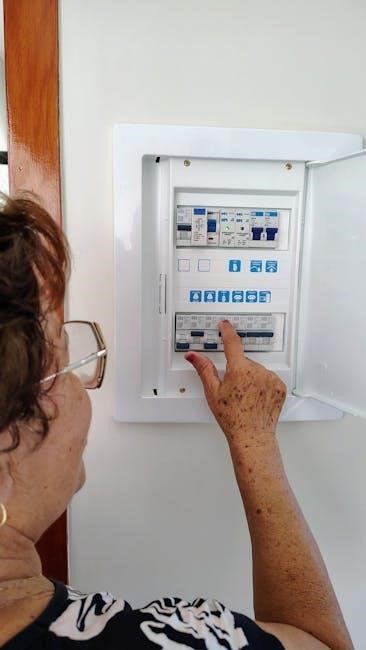
Pull it out far enough to clearly see the wiring connections and the product label‚ if present. Note the existing wiring configuration for reference during the Lutron dimmer installation. This careful removal process ensures a safe and organized transition.
Wiring Configurations
Successful installation hinges on correct wiring. Lutron Maestro motion sensor dimmers support both single-pole and 3-way configurations. Single-pole installations involve replacing a standard switch with the dimmer‚ utilizing line‚ load‚ and neutral wires.
3-way setups‚ however‚ require connecting the dimmer alongside a standard mechanical switch. Proper identification of line‚ load‚ and traveler wires is crucial. Always consult the detailed wiring diagrams provided with your specific model to ensure accurate connections and avoid potential electrical hazards.
Single-Pole Installation
Begin by carefully removing the existing switch and wallplate. Before disconnecting wires‚ note their positions for reference. Unscrew and gently pull the dimmer/switch out to view the label. Connect the line (hot) wire to the line terminal‚ the load wire to the load terminal‚ and the neutral wire to the neutral terminal.
Ensure all connections are secure. Carefully tuck the wires back into the electrical box‚ mount the dimmer‚ and attach the wallplate adapter. Power on the circuit and verify proper operation. Refer to the manual’s diagrams for visual guidance.
3-Way Installation with Standard Mechanical Switch
For 3-way installations‚ identify the common terminal on your existing mechanical switch. Connect the line wire to the common terminal and the traveler wires to the remaining terminals. At the Lutron dimmer location‚ connect the line/load wire to the designated terminal‚ and the traveler wires to the traveler terminals.
Ensure secure connections and carefully tuck wires into the box. Power on the circuit and test functionality from both switch locations. Proper wiring is crucial for correct 3-way operation; consult the wiring diagram in the manual for clarity.
Setting Up the Motion Sensor
The Lutron motion sensor offers both occupancy and vacancy modes. Occupancy mode automatically turns lights on upon motion detection and off after a set time delay. Vacancy mode requires manual activation; lights turn on with the switch‚ then off automatically when no motion is detected.
Adjust sensitivity to control the range of motion detection‚ minimizing false triggers. Fine-tune the time delay to customize how long lights remain on after motion ceases. Experiment with settings to achieve optimal performance for your specific space and needs.
Occupancy vs. Vacancy Mode
Occupancy mode is ideal for areas needing automatic lighting‚ turning lights on immediately upon motion detection. This is convenient for hallways or bathrooms. Vacancy mode requires manual activation – you first switch the lights on‚ and then the sensor maintains illumination while motion persists.
Vacancy mode is best suited for spaces where you don’t always want lights on automatically‚ like bedrooms or offices. Selecting the appropriate mode depends on your preference and the room’s intended use‚ optimizing energy savings and convenience.
Adjusting Sensitivity and Time Delay
Sensitivity controls the range of motion the sensor detects; higher sensitivity means it picks up movement from further away‚ while lower sensitivity reduces false triggers. Time delay determines how long the lights remain on after motion ceases. Adjusting these settings personalizes the sensor’s behavior.
Fine-tuning sensitivity prevents unwanted activations from pets or distant movements. Setting the appropriate time delay ensures lights stay on long enough for comfortable use‚ but don’t waste energy when the space is unoccupied. Experiment to find the optimal balance for your needs.
Customizing Settings with Application Notes
Lutron provides detailed application notes to further customize your Maestro motion sensor dimmer switch. Application Note 461 details the Test Mode‚ offering a temporary‚ short timeout – less than 15 seconds – ideal for coverage testing. This mode automatically exits after 5 minutes or a button press.
Utilizing these notes allows for precise adjustments beyond standard settings. The temporary timeout feature streamlines coverage verification‚ ensuring the sensor accurately detects motion within the desired area. These resources empower users to optimize performance and tailor the system to specific environmental requirements and preferences.
Test Mode Functionality
The Maestro motion sensor dimmer’s Test Mode provides a quick method for verifying sensor coverage. Activated through application notes (Application Note 461)‚ it initiates a temporary‚ shortened timeout – consistently less than 15 seconds. This allows for immediate feedback on motion detection capabilities within the space.
Crucially‚ this mode isn’t permanent. The device automatically exits Test Mode after 5 minutes of inactivity or upon any button press. If no motion is detected for over 15 seconds during testing‚ the connected lights will switch off‚ confirming functionality.
Temporary Timeout for Coverage Testing
Utilizing the Test Mode feature offers a streamlined approach to assess the motion sensor’s range and responsiveness. This function establishes a deliberately brief timeout period‚ generally under 15 seconds‚ facilitating rapid evaluation of detection zones. It’s a valuable tool during initial setup and for diagnosing potential coverage issues.

This temporary adjustment doesn’t alter the permanently programmed settings. The sensor automatically reverts to its standard timeout duration after either 5 minutes of inactivity or any user interaction with the device’s controls‚ ensuring normal operation resumes promptly.
Troubleshooting Common Issues
Encountering problems with your Lutron motion sensor dimmer? Two frequent concerns are lack of power and the sensor’s inability to detect movement. If the dimmer receives no power‚ double-check the circuit breaker and wiring connections‚ ensuring they are secure and correct.
For motion detection failures‚ verify the sensor’s line of sight isn’t obstructed and adjust sensitivity settings. Consider environmental factors; excessive heat or direct sunlight can sometimes interfere with performance. If issues persist‚ consult the full installation guide or contact Lutron support.
No Power to the Dimmer
If your Lutron dimmer isn’t receiving power‚ begin by verifying the circuit breaker hasn’t tripped. Reset it if necessary. Next‚ carefully inspect all wiring connections within the electrical box. Ensure wires are securely fastened under the screw terminals and that no loose connections exist.
Confirm the neutral wire is properly connected‚ as this is crucial for operation. Use a voltage tester to confirm power is reaching the dimmer itself. If power is present at the wiring but the dimmer remains unresponsive‚ the unit may be defective and require replacement.
Sensor Not Detecting Motion
If the motion sensor isn’t activating‚ first ensure there are no obstructions blocking its field of view. Objects like furniture or curtains can interfere with detection. Next‚ check the sensitivity setting; a lower setting reduces the range. Utilize the “Test Mode” function (accessed via the dimmer or application notes) to assess coverage and identify potential dead zones.
Confirm the sensor is mounted securely and isn’t vibrating. Consider ambient temperature – extreme temperatures can sometimes affect performance. If issues persist‚ a reset of the dimmer might be necessary to restore factory settings and recalibrate the sensor.
Cleaning and Maintenance
To maintain the optimal performance and appearance of your Lutron Maestro motion sensor dimmer switch‚ regular cleaning is recommended. Use a clean‚ damp cloth to gently wipe the surface of the dimmer. Avoid abrasive cleaners or solvents‚ as these can damage the finish.
Ensure the cloth is only slightly damp to prevent moisture from entering the device. Do not immerse the dimmer in water or any other liquid. Periodic visual inspections can help identify any dust buildup or debris that may affect functionality.
Recommended Cleaning Practices
For routine maintenance‚ a lightly dampened‚ soft cloth is the ideal cleaning tool for your Lutron Maestro dimmer. Avoid harsh chemicals‚ abrasive pads‚ or spray cleaners‚ as these can potentially harm the device’s surface and internal components.
Always ensure the dimmer switch is dry before restoring power. Disconnect power at the breaker before cleaning‚ if possible‚ for added safety. Regular‚ gentle cleaning prevents dust accumulation‚ maintaining responsiveness and extending the lifespan of your motion sensor dimmer.

Remote Control Compatibility
Lutron Maestro motion sensor dimmer switches demonstrate compatibility with Lutron HomeWorks Maestro Remote Dimmers‚ specifically the HD-RD series. These remote dimmers offer expanded control capabilities‚ allowing users to adjust lighting levels and manage scenes from a convenient distance.
It’s crucial to verify compatibility before integrating any remote control system. Utilizing only approved Lutron accessories ensures seamless operation and avoids potential interference or malfunctions. Refer to Lutron’s documentation for a complete list of compatible remote control options and detailed pairing instructions.
Lutron HomeWorks Maestro Remote Dimmers (HD-RD)
The Lutron HomeWorks Maestro Remote Dimmers (HD-RD) provide a sophisticated method for controlling your Maestro motion sensor dimmer switches within a broader‚ integrated lighting system. These remotes offer features beyond basic on/off and dimming‚ including scene control and scheduling capabilities.
Proper installation and configuration within the HomeWorks system are essential for optimal performance. Refer to the Lutron HomeWorks documentation for detailed instructions on adding and configuring HD-RD remotes. Ensure the system is correctly programmed to recognize and respond to the remote’s commands‚ maximizing convenience and control.
Safety Precautions and Warnings
Important: Electrical shock hazard! Always disconnect power at the circuit breaker before installing or servicing the dimmer switch. Failure to do so could result in serious injury or death. This device is intended for indoor use only and should not be exposed to moisture or extreme temperatures.

Do not attempt to disassemble or repair the dimmer switch yourself. If you encounter any issues‚ contact a qualified electrician. Cleaning should be performed with a clean‚ damp cloth – avoid harsh chemicals or abrasive cleaners. Improper installation or use may void the warranty and create a safety hazard.